As Esther and I continue our Pet Partners Handler Course, Unit 5, “Visit Best Practices“, it feels like a significant turning point. It leverages all the foundation we’ve built in communication, teamwork, and safety to apply it to what matters most: creating meaningful, safe, and compassionate visits for those we serve.
The Parts of a Visit
Every visit has three essential parts: the approach, interaction, and closure. For Esther and me, the approach means entering with calm energy, announcing ourselves, and always asking permission before approaching a client. As a giant-breed therapy dog, Esther’s presence can be overwhelming, so it’s vital that clients feel comfortable and in control.
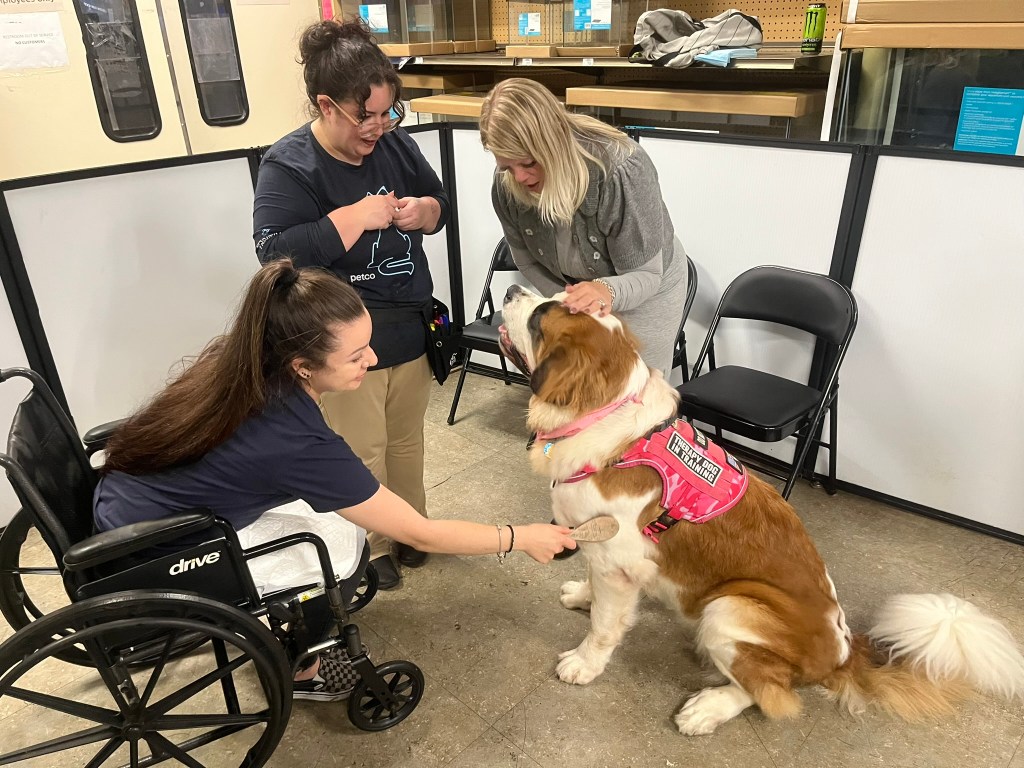
During interaction, I will guide Esther to the client’s side, never allowing her to lead, and remind people where she likes to be petted (under the chin or on her shoulder). These moments will build trust and create the bridge that connects the client and the animal. And when it’s time to say goodbye, we will make sure to leave a sense of warmth and continuity by saying, “Esther and I will see you again soon.”
Safety, Hygiene, and Infection Control
The guide reminds handlers that clean hands save lives. Each visit begins and ends with hand sanitizer or handwashing for both me and the client. I’ve started practicing this with Esther by making it part of our ritual: before and after every training session, she sits patiently while I “sanitize.” It’s a small, symbolic act of professionalism and care.
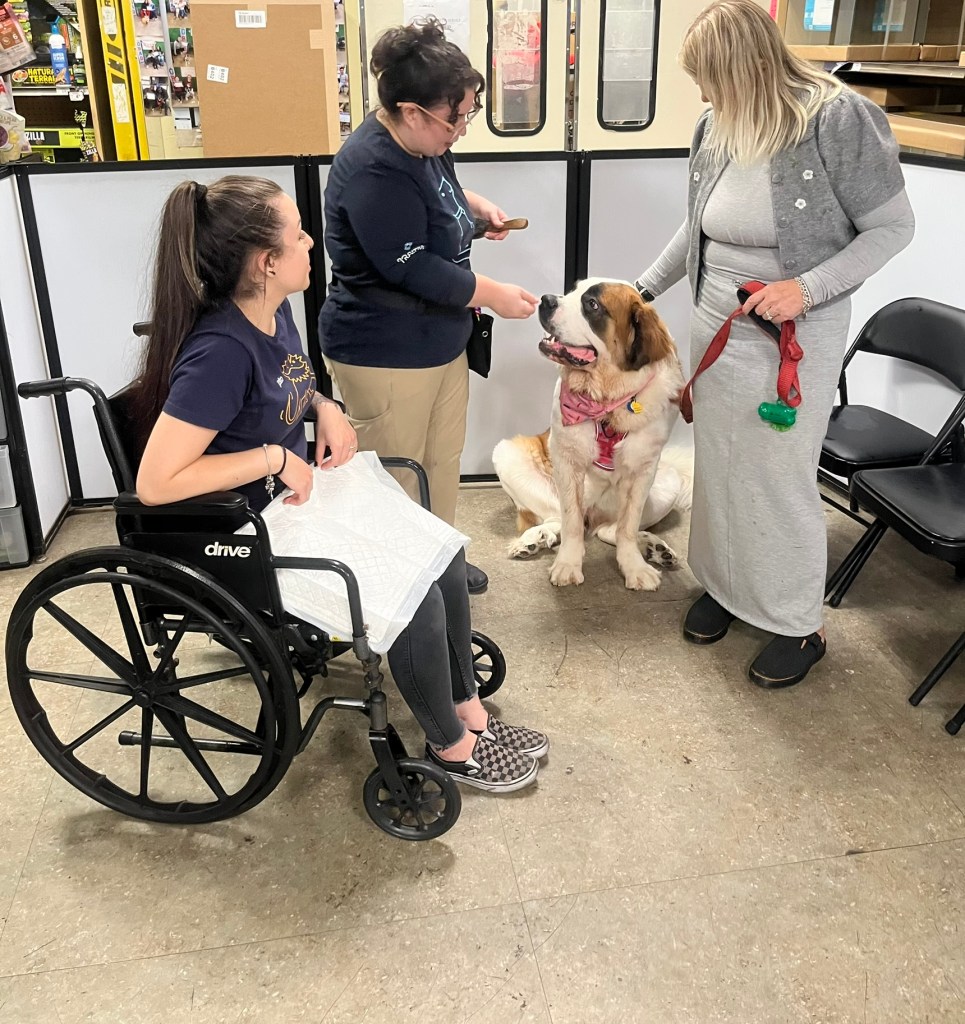
I also learned that infection control includes using barriers (such as disposable pads) if Esther is ever invited onto a bed or chair or even to put her head on someone’s lap and ensuring she doesn’t carry anything between rooms. These steps may seem minor, but they protect both clients and animals, demonstrating that we take our role seriously.
Visiting Groups and Other Teams
For a dog of Esther’s size, group visits require extra awareness. Unit 5 emphasizes reading the room, watching for distractions, noise levels, and potential sources of stress. Esther’s training sessions now include group interactions with multiple people talking or reaching out at once, simulating the kind of excitement she’ll experience in a real facility.
If multiple therapy animals are present, handlers should keep a safe distance (about three animal lengths apart). This ensures calm, controlled environments where every animal and every client feels secure.
Conversational Techniques and Respectful Language
Unit 5 also dives into how handlers communicate. Using person-first language (“person with Alzheimer’s” rather than “an Alzheimer’s patient”) and honoring pronouns shows respect and empathy. These choices remind clients they are people first, not defined by their illness or situation.
In conversation, the goal is to listen more than talk, to invite stories rather than interrogate. Sometimes, the most healing moments will occur in silence, as Esther rests her big head gently on someone’s hand.
Watching for Stress: In Them and Us
A powerful reminder in this module is that stress can affect anyone, including clients, staff, handlers, and animals. Esther’s signals are subtle: a sigh, turning her head away, or licking her lips. When I notice those cues, it will be time to pause or end the visit early. As the guide says, it’s never a failure to step back; it’s a mark of being your animal’s best advocate.
Reflecting on Growth
Unit 5 has shown me that successful visits aren’t about perfection; they’re about presence. Each time Esther and I train, I see her becoming more intuitive, reading my cues, and trusting that I’ll always keep her safe. That trust is what we’ll carry into every visit, from hospice rooms to nursing homes, and anywhere her gentle heart is needed.
 Anna & Esther: A Pet Therapy Team in the Making
Leave a comment