Anna & Esther: A Pet Therapy Team in the Making

Comfort, care, and companionship—offered by a thanatologist and her giant, gentle helper

  • Thanatology & community health professional
  • MA in Thanatology (CUNY Brooklyn College – in progress)
  • Volunteer bereavement support caller (Accent Care Hospice)
  • Trained end-of-life doula
  • Future MSW student (Liberty University)
  • Working toward grief & bereavement therapist licensure
  • Guided by compassion, dignity, and the belief that no one—human or animal—should face death alone
  • Therapy dog training teaches many lessons, not just for the dog, but for the handler, too. One of the most important is learning when to pause.

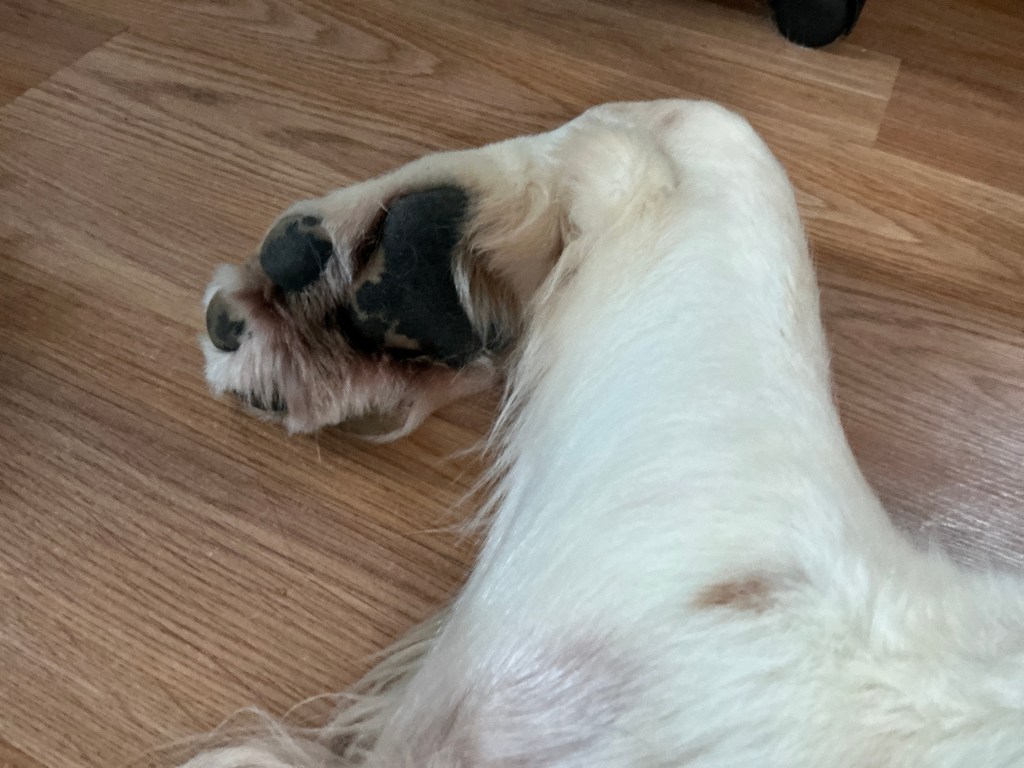
    Recently, Esther had to take a short break from her training after developing a small infection on one of her paw pads. While it’s minor and already being treated, it was enough to remind us that health always comes before progress.

    During her veterinary visit, Esther was calm, supported, and surrounded by care.
    A Small Paw, A Big Responsibility
    A closer look at the paw pad that needed time to heal—minor issues still deserve complete care.

    For a working dog—especially a giant breed like Esther—paw pads are essential. They support her weight, help her navigate different surfaces, and enable her to participate safely in training and therapy sessions. Even a minor irritation can quickly become painful if not addressed.

    During her veterinary visit, Esther was calm, cooperative, and her usual gentle self while her paw was examined and treated. The recommendation was clear: rest, treatment, and time to heal before returning to training activities.

    Why Time Off Is Part of Ethical Therapy Dog Work

    In therapy dog work, stepping back is not failure; it’s a responsibility.

    Pet Partners emphasizes that a therapy animal’s physical and emotional well-being must always come first. As Esther’s handler and mom, it’s my job to notice subtle changes and advocate for her comfort, even when she would happily keep going.

    Taking this pause allows:

    • Proper healing of her paw pad
    • Prevention of further irritation or injury
    • Positive associations with training and handling
    • Long-term sustainability for her future therapy work

    Healing Before Helping

    Esther will return to training only when:

    • Her paw pad is fully healed
    • She is cleared by her veterinarian
    • She is comfortable, confident, and pain-free

    Until then, we’re focusing on rest, gentle care, medicated foot soaks, and lots of quiet bonding time at home.

    A Gentle Reminder for Handlers and Caregivers

    Whether working with animals or people, the lesson is the same: healing doesn’t happen on a schedule. Sometimes the most loving and professional decision is to slow down.

    Esther’s journey isn’t ending; it’s simply pausing for another week so she can come back healthy, strong, and ready to do the work she loves. 🐾

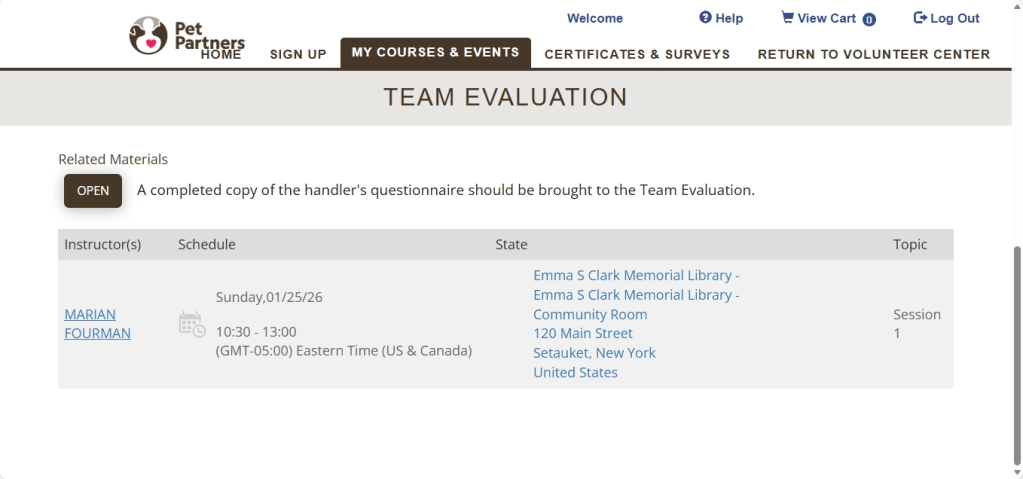
  • Today feels like such a milestone in this journey Esther and I have been on together. After months of training, practicing skills, building confidence, and learning how to work as a therapeutic team, we now have our official Pet Partners Team Evaluation date:
    Sunday, January 25, 2026, at the Emma S. Clark Memorial Library in Setauket, NY.

    Our official Team Evaluation session — January 25, 2026!

    I can’t even describe how proud I am of Esther. From the moment she came home with me at just eight weeks old, she has shown this gentle, intuitive spirit that makes her perfect for therapy work. Every step of this process, from mastering “Leave It “to practicing “Head Down” to calmly navigating busy environments, has been preparing her for this moment.

    Preparing for the Big Day

    Between now and January, Esther and I will continue polishing her skills, making sure she’s confident with all the required elements:
    ✔ Calm greetings
    ✔ Loose-leash walking
    ✔ Reactions to equipment
    ✔ Reactions to other dogs
    ✔ Accepting touch from unfamiliar people
    ✔ Remaining composed in unpredictable situations

    And, of course, I’ll be working on my handler responsibilities too. The evaluation is a team effort, and I want to show up as centered and confident as Esther is.

    Why This Matters

    This isn’t just about passing a test. It’s about the calling I feel as a thanatology and community health student, someone who has personally walked alongside grief, and someone who believes deeply in the healing presence of animals. Esther will not just be a therapy dog, she’ll be a partner in helping people feel seen, comforted, and less alone.

    A Loving Reminder

    Pet therapy doesn’t just happen; it’s built. It’s trained. It’s nurtured. And it requires a dog with a heart big enough to love everyone she meets.

    Esther has that heart.

    We’re ready. We’re grateful. And we can’t wait for this next chapter.

    🐾 Stay tuned—we’ll be sharing updates as evaluation day gets closer!

  • Today was a significant milestone in Esther’s therapy-dog journey: she visited her veterinarian, Dr. Tracy, at Howard Beach Animal Clinic for her official Pet Partners medical clearance, and she passed with flying colors!

    Esther checking out the scale—always curious and ready to cooperate during her exam.

    As a giant-breed therapy-dog-in-training, Esther’s health and physical well-being are essential for the comfort and safety of the people she will eventually serve. Dr. Tracy completed her full exam, checked all her vitals, reviewed her vaccination records, and made sure she is in excellent condition to continue with the next steps of the Pet Partners process.

    Esther handled the visit like a pro: patient, calm, and full of her usual gentle energy. She even soaked up all the attention from the veterinary team. With her paperwork now officially completed and approved, Esther is one step closer to her evaluation as a therapy dog and to her future work in hospice, hospitals, and community care.

    Watching her stand so confidently during her exam was a reminder of why we started this journey. Therapy work takes time, commitment, and teamwork, but Esther shows me every day that she was born for this role. Our goal is to provide comfort, support, and companionship to individuals and families facing illness, loss, and grief, and moments like today bring us closer to that calling.

    Esther is standing patiently as Dr. Tracy and the vet tech complete her medical clearance. She is such a gentle giant.

    Esther will continue her training as we prepare for her evaluation, and I couldn’t be prouder of my girl. 🐾❤️

  • Healing with Anna & Esther

    Some moments settle into your heart so clearly that you can look back and remember every detail; the feeling in the room, the warmth in your chest, even the quiet sound of a puppy breathing against your ear. One of those moments happened for me in June 2024, the day I met the Saint Bernard who would change my life.

    I thought I was simply going to look at the girl puppies.
    But the truth is, one girl puppy was already looking for me.

    🐶 “Just Looking” … Until I Saw Her

    When my husband brought me to meet the litter, I immediately asked to see the female puppies. The breeder brought them over, and that’s when I noticed her; the largest female in the group, soft and steady, with a calm presence that made her stand out instantly.

    While her sisters playfully tumbled around, she didn’t rush.
    She simply looked at me with those dark, thoughtful eyes.

    And I felt something shift.

    June 2024 — the moment Esther picked me. At six weeks old, she curled into my arms and made the tiniest noise in my ear. I knew right then I was her mom.
    💗 The Sound That Sealed It

    I decided to pick her up, wanting to feel her close. As soon as she settled into my arms, she leaned in and made the softest little noise, half sigh, half puppy grumble, right in my ear.

    It was such a tender, trusting sound that it melted something inside me.

    Right then, without hesitation, I turned to the breeder and said:
    “I want her. I want Esther.”

    The breeder smiled gently and told me something I wasn’t ready for:
    Because she was only six weeks old, I’d have to wait two more weeks before she could come home. She still needed to stay with her biological mother until she was fully weaned.

    Two weeks felt like forever.
    But I waited, preparing the house for her. I waited every single day until the moment I could finally bring her home.

    🏡 The Ride Home: A New Beginning

    When the day finally came to pick her up, everything felt surreal. I remember placing her in the car, watching her tiny body settle against the seat, knowing our life together was truly beginning.

    Heading home for the very first time, Esther’s first car ride at eight weeks old
    She snuggled her stuffed pup the whole way home, already showing that gentle, comforting spirit she still carries today.
    Completely at peace. Esther slept most of the ride home, trusting that she was safe and loved
    🐾 Home at Last

    Bringing her inside for the first time felt like stepping into a new chapter; one I didn’t even know I’d been waiting for. She explored, sniffed, wiggled, and then curled right into me as if she had already memorized my heartbeat.

    Home together; the beginning of our life-long bond and the first day of our journey as a team.
    A Bond with Purpose That Was Always There

    What I didn’t know that day—but see so clearly now—is that the tiny, calm, six-week-old puppy I chose would one day grow into a 165-pound Saint Bernard with a heart big enough to comfort others.

    I didn’t know she would begin training to become a therapy dog.
    I didn’t know our calling would lead us to work hard to learn to sit beside people in hospice, support grieving children, or want her to be a part of my work as a thanatology professional.

    But her gentleness was there from the very beginning; before the training, before the certificates, before the future we are now building together.

    That moment in June 2024 wasn’t just the start of a relationship.
    It was the beginning of a calling shared between a woman and a Saint Bernard, who chose each other long before they understood why.

  • I’m thrilled to share a significant milestone on this journey with Esther:

    I have officially completed the Pet Partners Handler Training!

    This course has given me the knowledge, confidence, and foundation to partner safely and compassionately with Esther, my beloved Saint Bernard, during future therapy visits.

    As I complete my master’s degree in Thanatology/Community Health this semester, this certification aligns beautifully with the supportive work I hope to do in the near future. After I finish this degree, I will be continuing my education and beginning my MSW, with long-term goals of offering grief and bereavement therapy to families and individuals. My hope is to integrate pet therapy services into that work, bringing together my professional training, my lived experiences, and Esther’s gentle, comforting presence.

    My Official Certificate
    Proud to share my official Pet Partners Handler Training certificate. One step closer to becoming a registered therapy dog team with Esther!
    What the Training Covered

    This certificate reflects completion of the full Pet Partners coursework:

    • Training for Therapy Dog Teams
    • Therapy Animal Handler Online Course
    • Canine Body Language
    • Infection Prevention and Control

    Each section strengthened my understanding of handler responsibilities, from infection control to recognizing subtle signs of stress in dogs to navigating sensitive environments with professionalism and care.

    Why This Matters for Our Future Visits

    Therapy animal visits can offer grounding, comfort, and connection for people navigating illness, isolation, grief, or emotional stress. This training emphasized how to:

    • Support clients with respect and sensitivity
    • Advocate for Esther’s wellbeing and comfort
    • Follow facility protocols and infection control guidelines
    • Work collaboratively with staff
    • Create safe, calm, meaningful interactions

    These principles strongly complement the work I plan to do along my academic and professional path in thanatology and social work.

    Next Step: Esther’s Medical Evaluation 🩺

    Now that I’ve completed the handler portion, Esther will undergo her veterinary health screening. Pet Partners requires therapy animals to be:

    • Healthy and up-to-date on vaccinations
    • Emotionally steady
    • Behaviorally appropriate in various environments

    She has also been practicing important skills like:

    • “Leave It”
    • “Visit”
    • “Head Down”
    • Remaining calm around wheelchairs, walkers, and medical equipment

    Esther will continue her professional training all the way up to evaluation day to make sure she feels confident, safe, and ready for her future as a therapy dog.

    I’m so proud of how far my giant fur daughter has come.

    Esther’s cat brother is proud of her, too!
    Moving Forward

    Completing the Pet Partners Handler Training is one more step toward the future I’m building; a future where I can combine my academic training, my commitment to grief and bereavement support, and the healing presence that Esther brings.

    Healing with Anna and Esther continues to grow with every milestone. I look forward to sharing more updates as we prepare for Esther’s medical evaluation and progress toward becoming a registered therapy team.

    Thank you for walking this journey with Esther and me🐾

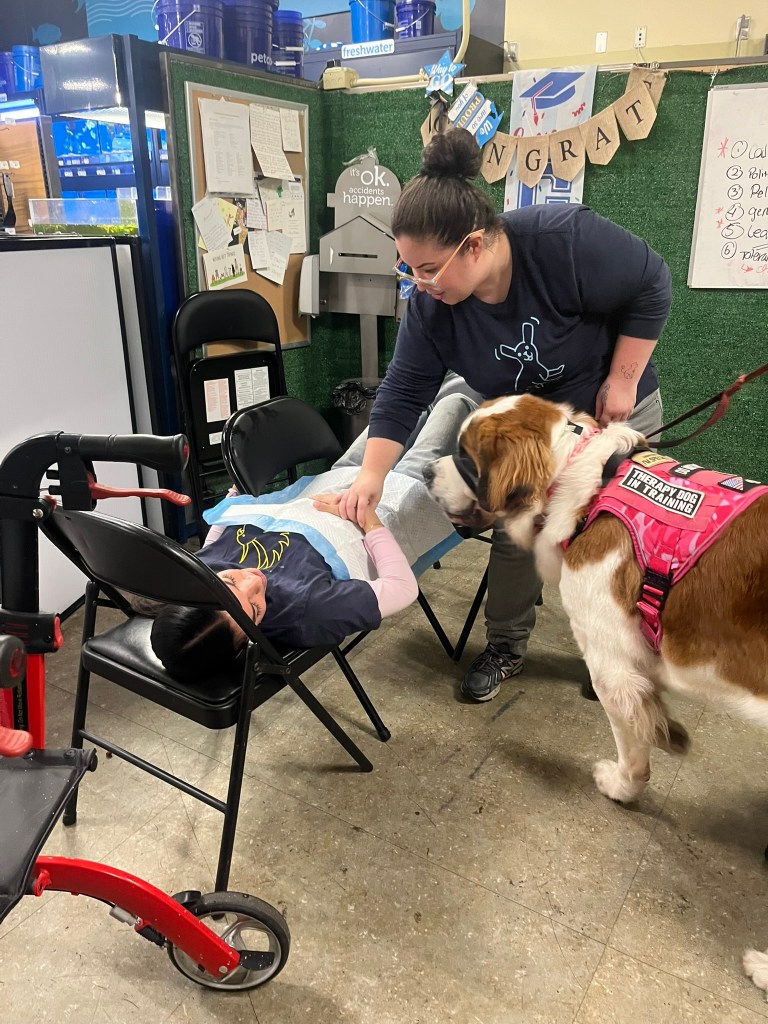
  • Training Esther for therapy work has opened my eyes to how even the smallest skills can bring comfort to someone who truly needs it. One of the most meaningful cues Esther’s trainers and I are working on right now is “head down,” a gentle position where Esther rests her head close enough for someone to pet her without needing to sit up, reach, or strain.

    For clients who cannot get out of bed or who have minimal mobility, this skill is not just helpful; it’s essential. And because safety and infection control always come first, Esther and I practice this with protective barriers, just as we will use them in real healthcare, hospice, and long-term care settings.

    Bringing Comfort Within Reach

    Many people we will meet during therapy visits may be:

    • Bed-bound
    • Recovering from surgery
    • Attached to medical equipment
    • Experiencing pain, weakness, or fatigue
    • At the end of life

    For them, even reaching out can be exhausting. By teaching Esther to gently move her head closer to the client, she becomes accessible to everyone, not just those who can sit up or lean forward.

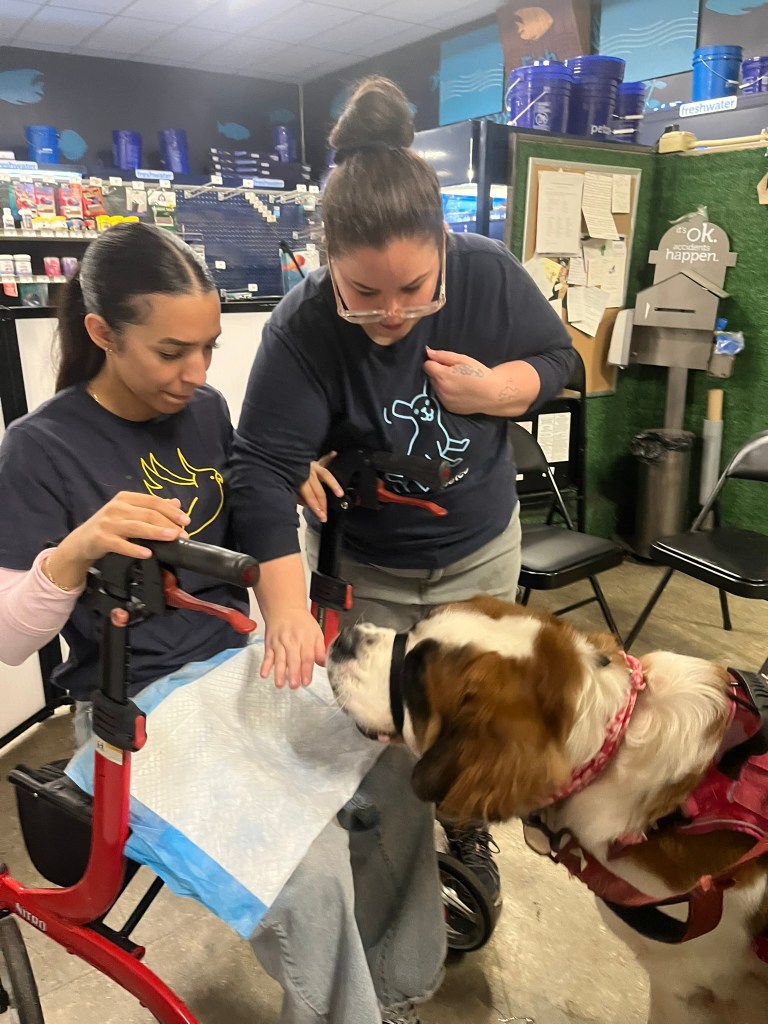
    Practice Session: Esther Learns to Approach a Reclined Client
    Practicing a real-life scenario: Esther learns to approach slowly and safely when someone is reclined and unable to reach.
    Supporting Safety with Protective Barriers

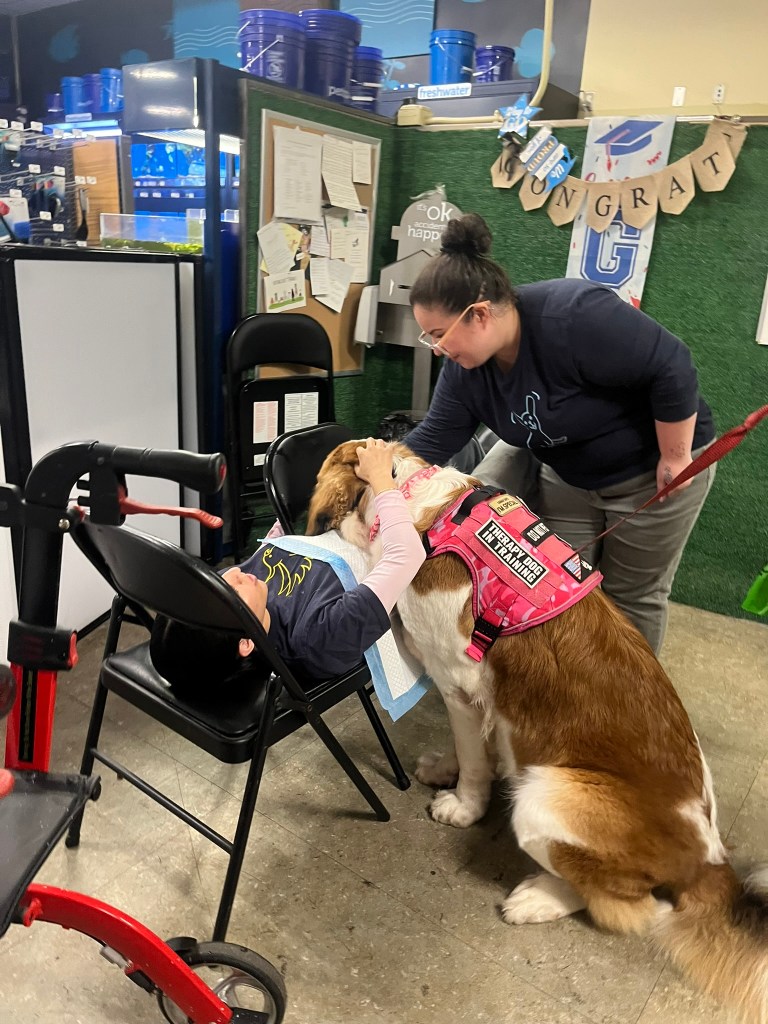
    In real facilities, we will always follow infection-control guidelines. This includes using clean, single-use barriers between Esther and any bedding or clothing. Even when only her head is resting near a client, we practice with barriers so that the habit becomes second nature.

    Using a clean barrier helps protect both the client and Esther, an essential part of therapy-dog infection control.
    Building Trust, Calm, and Connection

    The “head down” skill supports more than mobility; it creates space for emotional connection. Some clients may not have the energy to speak, but they can still rest a hand on Esther’s soft fur. That simple connection can provide:

    • Grounding during anxiety
    • Comfort during pain
    • Presence during loneliness
    • Companionship at end of life
    Esther practices lowering her head carefully, just close enough for a gentle touch without overwhelming the client.
    Making Everyone Feel Included in the Visit

    Nothing breaks my heart more than the idea of someone being left out of a therapy visit simply because they can’t move easily. By teaching Esther this skill, it ensures that every person, regardless of mobility level, has the opportunity to feel included, seen, and comforted.

    This training helps us say:

    • “You matter.”
    • “You are not forgotten.”
    • “You deserve comfort too.”
    A beautiful example of why this skill matters: Esther stays calm, steady, and within easy reach.
    Preparing Now for the Clients Who Need Us Most

    Each practice session brings us closer to being ready for real therapy visits in hospice, hospitals, children’s programs, and eldercare. Esther is learning:

    • To approach beds and chairs slowly
    • To stop at a safe and comfortable distance
    • To place her head gently on a designated barrier
    • To hold her position calmly until cued to move

    This is the kind of work that makes therapy-animal visits meaningful, dignified, and accessible.

    We practice with care today so we can serve with compassion tomorrow.

  • Animal-assisted therapy (AAT) has become one of the most meaningful and clinically valuable tools in mental health, hospice care, trauma recovery, and bereavement support. Decades of research show measurable psychological and physical benefits, yet most U.S. insurance plans still do not cover the service directly, even though the evidence is strong (Fine, 2019).

    As someone studying and engaged in grief and end-of-life work, and as a handler training my Saint Bernard, Esther, for therapy-dog work, I see every day how powerful the human–animal bond can be. A single moment of connection can calm panic, reduce suffering, and open space for meaningful conversation.

    So why isn’t this covered? And what needs to change?

    What Insurance Covers — and What It Doesn’t
    Medicare

    Medicare currently does not cover AAT for mental health, hospice, or rehabilitation.
    The clinician may be reimbursed for psychotherapy or occupational therapy, but the animal’s role is not recognized as part of the billable service.

    Medicaid

    Some state Medicaid plans allow animal-assisted therapy when:

    • it is delivered by a licensed clinician
    • it is goal-oriented
    • it is part of a documented treatment plan

    However, this varies significantly by state and is not standard practice.

    Private Insurance

    Some treatment programs incorporate AAT and accept insurance, but the session is billed under standard CPT codes (e.g., psychotherapy, OT, PT) — not because the animal is recognized in policy. Many private plans explicitly exclude “pet therapy.”

    This mismatch between evidence-based benefit and insurance policy is the heart of the problem.

    🐾 The Evidence Is Clear: AAT Works

    Peer-reviewed research has repeatedly demonstrated the benefits of animal-assisted therapy:

    1. Trauma, Anxiety & Depression

    Interacting with therapy animals reduces cortisol, anxiety, and emotional distress (Pendry et al., 2019; Pendry et al., 2020).
    A systematic review found that AAT significantly improves PTSD symptoms and emotional regulation (O’Haire, 2017).

    2. Hospice & Palliative Care

    In end-of-life care, AAT decreases pain perception and improves emotional well-being (Diniz Pinto et al., 2021).

    3. Grief & Bereavement

    Animals help create emotional safety, which encourages deeper expression of grief — a key part of Worden’s mourning tasks. AAT supports children in processing difficult emotions and trauma (Dietz et al., 2012).

    4. Child Emotional Regulation

    Human–animal interaction boosts oxytocin and reduces stress hormones, grounding children during periods of emotional upheaval (Beetz et al., 2012).

    5. Physical Rehabilitation

    A meta-analysis found that AAT improves mobility, motivation, endurance, and social functioning (Nimer & Lundahl, 2007).
    In pain management, therapy animals reduce both reported pain and physiological stress (Marcus, 2012).

    The research base is robust, consistent, and multidisciplinary.

    💔 Why This Matters for Grief and End-of-Life Care

    People who are grieving — or approaching the end of life — often describe intense emotional pain, fear, and loneliness. A therapy animal provides:

    • grounding during traumatic grief flashbacks
    • comfort during anticipatory grief
    • quiet support for families in hospice
    • gentle space for children to open up
    • reduced anxiety during medical or counseling appointments

    These aren’t “extras.”
    They are clinically meaningful interventions supported by evidence (Cherniack & Cherniack, 2014).

    Over 20 years of research, no major study has found harm when therapy animals are appropriately trained, screened, and handled.

    🏛 Why Insurance Should Cover Animal-Assisted Therapy
    1. AAT is evidence-based

    The literature supporting AAT is stronger than many therapies already reimbursed (Fine, 2019).

    2. It reduces healthcare costs

    Lower anxiety, decreased need for sedatives, improved therapy participation, and better rehabilitation outcomes all translate to cost savings (Marcus, 2012).

    3. It improves access to care

    Patients and families are more willing to attend therapy when a trained animal participates (Geist, 2011).

    4. AAT is regulated and safe

    Organizations like Pet Partners and IAHAIO have rigorous standards for infection control, behavior testing, and handler education (Fine, 2019).

    5. It increases equity in mental health and hospice care

    Families shouldn’t have to pay out of pocket for an intervention shown to reduce suffering across multiple populations.

    🔎 What Needs to Change

    To make AAT reimbursable, health systems must:

    • develop CPT codes for animal-assisted interventions
    • include AAT in Medicare/Medicaid mental health and hospice benefits
    • educate insurers about evidence-based outcomes
    • require licensure + certified animal-handler teams
    • ensure clear safety, infection-control, and documentation standards

    This is achievable.
    The research already exists.
    Policy just needs to catch up.

    📣 How Families Can Advocate

    When calling your insurance provider, use this script:

    “My provider incorporates animal-assisted therapy as part of a clinically appropriate treatment plan.
    Is this covered under my mental health or rehabilitation benefits?
    Are there exclusions for animal-assisted therapy?
    What documentation does my clinician need to submit?”

    Families can also write to:

    • state Medicaid offices
    • hospice agencies
    • hospital advisory boards
    • legislators working on mental health parity

    Advocacy is how change begins.

    Final Thoughts

    As a thanatology student and grief-support advocate, and as someone training my own animal partner, I see firsthand how essential this modality is. Animal-assisted therapy is not cute, trendy, or optional. It is healing, evidence-based, and deserving of recognition in U.S. healthcare policy.

    Insurance coverage won’t just save money.
    It will ease suffering — one visit, one family, one therapy dog at a time.

    References:
    • Beetz, A., Uvnäs-Moberg, K., Julius, H., & Kotrschal, K. (2012). Psychosocial and Psychophysiological Effects of Human-Animal Interactions: The Possible Role of Oxytocin. Frontiers in Psychology, 3(234). https://doi.org/10.3389/fpsyg.2012.00234
    • Cherniack, E. P., & Cherniack, A. R. (2014). The Benefit of Pets and Animal-Assisted Therapy to the Health of Older Individuals. Current Gerontology and Geriatrics Research, 2014(1), 1–9. https://doi.org/10.1155/2014/623203
    • Dietz, T. J., Davis, D., & Pennings, J. (2012). Evaluating Animal-Assisted Therapy in Group Treatment for Child Sexual Abuse. Journal of Child Sexual Abuse, 21(6), 665–683. https://doi.org/10.1080/10538712.2012.726700
    • Diniz Pinto, K., Vieira de Souza, C. T., Benamor Teixeira, M. de L., & Fragoso da Silveira Gouvêa, M. I. (2021). Animal assisted intervention for oncology and palliative care patients: A systematic review. Complementary Therapies in Clinical Practice, 43(101347), 101347. https://doi.org/10.1016/j.ctcp.2021.101347
    • Fine, A. H. (2019). Handbook on animal-assisted therapy : foundations and guidelines for animal-assisted interventions. Academic Press is an imprint of Elsevier.
    • Geist, T. S. (2011). Conceptual Framework for Animal Assisted Therapy. Child and Adolescent Social Work Journal, 28(3), 243–256. https://doi.org/10.1007/s10560-011-0231-3
    • Marcus, D. A. (2013). The Science Behind Animal-Assisted Therapy. Current Pain and Headache Reports, 17(4). https://doi.org/10.1007/s11916-013-0322-2
    • Nimer, J., & Lundahl, B. (2007). Animal-Assisted Therapy: A Meta-Analysis. Anthrozoös, 20(3), 225–238. https://doi.org/10.2752/089279307×224773
    • O’Haire, M. E., Guérin, N. A., & Kirkham, A. C. (2015). Animal-Assisted Intervention for trauma: a systematic literature review. Frontiers in Psychology, 6(1121). https://doi.org/10.3389/fpsyg.2015.01121
    • Pendry, P., Carr, A. M., Gee, N. R., & Vandagriff, J. L. (2020). Randomized Trial Examining Effects of Animal Assisted Intervention and Stress Related Symptoms on College Students’ Learning and Study Skills. International Journal of Environmental Research and Public Health, 17(6), 1909. https://doi.org/10.3390/ijerph17061909
    • Pendry, P., & Vandagriff, J. L. (2019). Animal Visitation Program (AVP) Reduces Cortisol Levels of University Students: A Randomized Controlled Trial. AERA Open, 5(2), 233285841985259. https://doi.org/10.1177/2332858419852592

  • How Esther Learns to Make Safe Choices

    When people see Esther, 165 pounds of gentle Saint Bernard fluff, they often can’t imagine her doing anything wrong. However, like every therapy animal, she too needs to master certain skills that ensure everyone’s safety and comfort during visits. One of the most important of these is “Leave it.”

    “Leave it” might sound simple, but in the world of Animal-Assisted Interventions, it’s a cornerstone of safety and professionalism. This command teaches therapy animals to ignore distractions, whether that’s food dropped on a hospital floor, a used tissue on a bedside table, or another animal passing by, and most importantly, medication. It’s all about impulse control and trust between handler and animal.

    💊 Why “Leave It” Matters

    In a healthcare or hospice setting, unexpected moments happen all the time. A nurse might accidentally drop a pill bottle, scattering medication across the floor. For an untrained dog, that might look like a treat, or at least something interesting to sniff. But for a therapy animal, even one curious nose near those pills could be dangerous.

    That’s where “leave it” becomes more than a command; it’s a safeguard. It ensures Esther pauses and looks to me or her trainer instead for direction, instead of investigating something that could harm her or someone else. In these moments, her restraint protects both her health and the well-being of the people we’re there to serve.

    Beyond infection control and safety, “leave it” also promotes respectful boundaries. Clients may have food trays, medical supplies, or personal belongings nearby. When Esther calmly walks past without touching, it shows professionalism and helps everyone feel secure.

    Esther practicing her “leave it” with a pill bottle, learning that safety always comes before curiosity.
    🐾 Training in Progress

    We practice “leave it” every day, both at home and on walks, as well as during training sessions. I start with small challenges, such as dropped treats, and then progress to more complex ones, like pill bottles or crinkly food wrappers. Each time Esther resists the urge and looks at me instead, she earns praise (and sometimes a reward). The goal is for the behavior to become second nature, so even when something unexpected hits the floor during a visit, she knows exactly what to do.

    Trust, Respect, and Teamwork

    “Leave it” isn’t just about obedience; it’s about trust. It says, I trust you to make the right choice, and you can trust me to keep you safe.
    That mutual respect transforms a well-behaved dog into a confident and compassionate therapy partner, one ready to bring calm and comfort, regardless of the environment.

    Leave It Practice = Success! 🐾👏

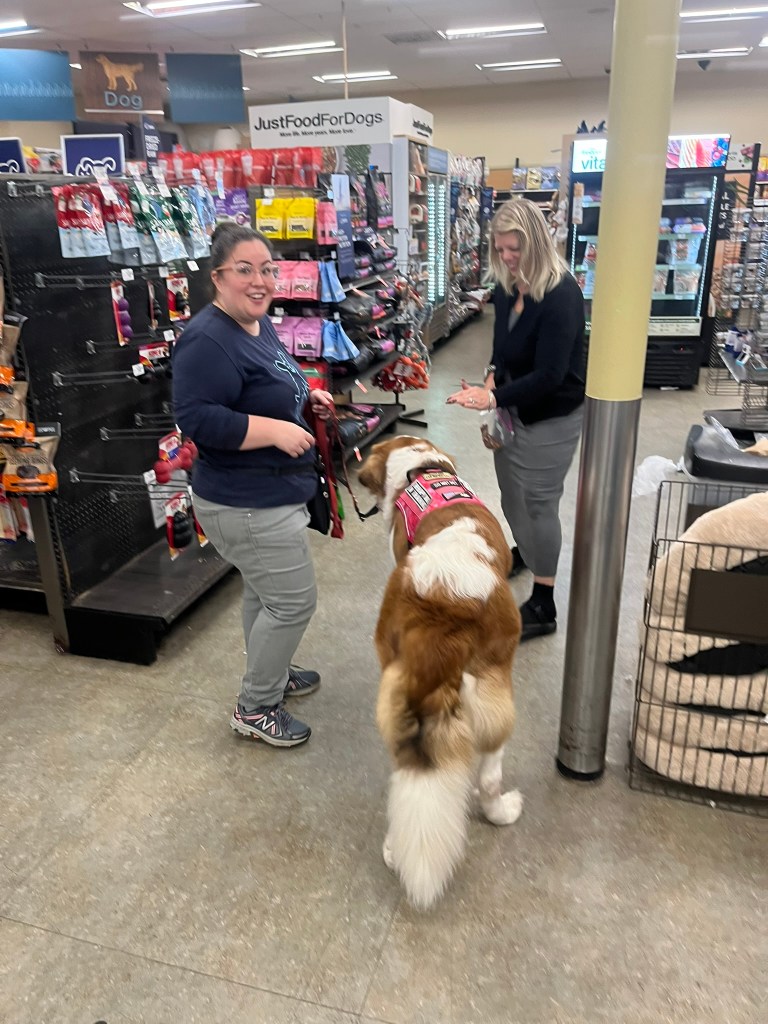
    Today at the pet store, Esther had a big training moment, and she nailed it! With treats, toys, and distractions everywhere, she practiced her “leave it” skill beautifully.

    Her trainer and I praised her for a job well done, and she soaked up every bit of that encouragement.
    Every session brings her one step closer to becoming the calm, safe, and reliable therapy partner she’s meant to be.

  • When Esther and I began our Pet Partners training, I never imagined how meaningful a simple trading card could become. These small, colorful keepsakes, featuring our therapy animals, are so much more than souvenirs; they’re a way to carry comfort beyond the visit.

    Even though Esther is still training and practicing mock visits, creating her trading cards has already become one of my favorite parts of this journey. They capture her gentle Saint Bernard spirit and allow others to remember the joy she brings, even during practice sessions.

    Esther gently meets a participant during a mock therapy visit.
    Why Trading Cards Matter

    During a visit, even a mock one, emotions often run high. People smile, laugh, and sometimes even tear up as they pet Esther’s soft fur or tell stories about their own pets. But when the visit ends, those moments can feel fleeting. A trading card offers something tangible, a small keepsake that reminds them of warmth, joy, and companionship.

    Clients can tuck the card into a book, tape it to a wall, or keep it on their nightstand. For those in long-term care or hospice, that little card can serve as a gentle reminder that love still shows up, even in the form of fur and paw prints.

    Esther’s therapy dog trading card front, with a purple sparkle border and the words ‘Forever Friend.’
    🐶 Sharing Joy and Information

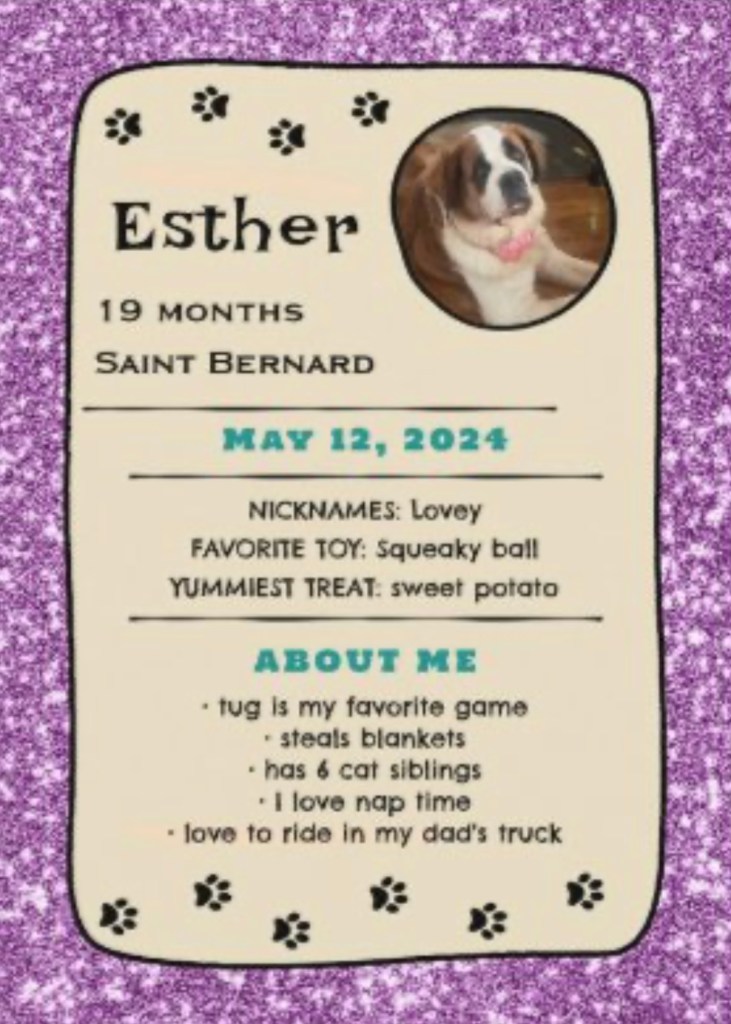
    Trading cards are also a fantastic way to share information about our therapy animals. Esther’s card includes her photo, age, breed, favorite toy (the squeaky ball, of course!), and her favorite treat, sweet potato. It helps people see her as an individual, not just a visiting dog.

    For children, cards often become fun conversation starters. They’ll ask, “What’s a Saint Bernard?” or “Does Esther really ride in her dad’s truck?” Suddenly, the visit becomes interactive, personal, and educational; just as Pet Partners hopes every interaction will be.

    Back of Esther’s therapy dog trading card with fun facts and personality details
    Connection That Lasts

    Pet Partners encourages handlers to consider how they build trust and connection, not just during visits, but between them. Trading cards act as a gentle bridge between those moments, a way to say, “I’ll see you again.”

    Even during training, Esther’s cards have helped open doors and spark meaningful exchanges. Each mock visit provides us with an opportunity to practice teamwork, communication, and empathy, the very skills we’ll carry into our future therapy work.

    When Esther completes her Pet Partners certification, these same trading cards will take on even greater significance. They’ll accompany her on real visits, to hospitals, nursing homes, and hospice centers, offering clients a way to keep a small piece of her calm and kindness close.

    Every handler’s card tells a story, and together they remind us that kindness and comfort come in many forms, sometimes on four legs with a drooly grin.

  • Preparing for Real Visits with Confidence and Compassion

    This week’s lesson, Unit 7: Putting It All Together, marks a turning point in our journey. After learning the foundations of animal-assisted therapy, infection control, and teamwork with facilities, this unit helps us envision what an actual visit will look like, from the moment we pack our bags to the time we leave the facility.

    For Esther and me, this feels like the moment where training meets heart. Everything we’ve practiced, gentle greetings, reading body language, infection control, and respectful communication, now comes together as we prepare to step into real-world settings, such as hospices and nursing homes.

    🧺 What to Bring on a Visit

    Pet Partners reminds handlers to think ahead and come prepared. That means bringing all the essentials for safety, comfort, and connection.

    Our visit bag checklist:
    • Fresh water and a clean bowl
    • Treats (only if permitted by the facility)
    • Soft grooming brush
    • Waste bags and wipes
    • Hand sanitizer
    • Esther’s trading cards to help spark conversation
    • A special toy that’s used only during visits
    • Clean collar, harness, and leash
    • Closed-toe shoes and professional, neat attire

    Being prepared isn’t just about organization; it’s about respect. Every clean leash, every sanitized hand, every calm greeting helps create trust and comfort for the people we meet.

    Ready for kindness, one gentle visit at a time
    🐾The Visit Snapshot

    In a Pet Partners example story, Kate and Sebastian (a mini horse therapy team) complete their first visit to a retirement home. Their day begins with a quiet check-in with staff, a quick review of who they’ll be seeing, and a gentle entrance into the first resident’s room.

    Each small moment in their visit, from offering sanitizer to reading residents’ cues and knowing when to step back, models the mindfulness and professionalism that therapy teams bring to every encounter.

    Esther and I practice the same skills during our mock visits. Before we enter the room, I check in with her. If her tail loosens and her breathing is calm, she’s ready. If she leans into me or looks away, I know to pause. These tiny check-ins are what make our partnership strong.

    Greeting new friends. Communication is everything
    Calm, Clean, and Compassionate

    A significant part of this unit focuses on infection control and professionalism, two key aspects that demonstrate respect for the people we visit. Handwashing before and after contact, avoiding shared bedding, and keeping our equipment clean aren’t just rules; they’re acts of care.

    Each visit is an opportunity to bring comfort, safety, calmness, and compassion. That’s the heart of therapy work: meeting people where they are, with empathy and presence.

    During training, Esther practiced calmly approaching mobility aids, such as walkers and wheelchairs. Safety comes first; every greeting should be slow, gentle, and respectful of personal space
    Looking Ahead

    As we are near the end of the Handler Course, I can feel how much we’ve both grown. Esther’s confidence and calm presence are deepening with each mock visit, and I’m learning to slow down, observe, and truly listen, both to her and to those we’ll one day serve.

    We’re almost ready to take the next step: the evaluation that will mark our transition from training to service.

    It’s exciting, a little nerve-wracking, and significant, because this isn’t just a certification. It’s the beginning of the work we were meant to do together.

    Almost at the end of our Handler Course! Each week has brought new lessons in patience, safety, and partnership. Esther and I have grown so much together; soon, we’ll be ready to take our evaluation and begin our journey as an official therapy team. 🐾