When preparing an animal for a therapy visit, grooming is much more than a cosmetic step, it is an essential part of ensuring comfort, health, and professionalism. For therapy teams, appearance and hygiene directly reflect the standard of care offered to clients, many of whom may be vulnerable or immunocompromised.
Why Grooming Matters
Health and Safety for Clients
Clean, brushed coats reduce shedding and dander, which helps minimize allergic reactions. Nails trimmed to a safe length prevent accidental scratches, and clean paws and coats mean fewer germs brought into sensitive environments like hospitals and hospice.
Comfort for Your Pet
A well-groomed dog feels more comfortable during interactions. Mats, tangles, and overgrown nails can cause pain or discomfort, making it harder for your animal to stay calm and engaged during therapy work.
Professional Appearance
As a therapy team, we represent professionalism and reliability. A freshly groomed dog presents an image of care and dedication that reassures staff, clients, and family members.
Bonding and Routine
Grooming sessions strengthen the bond between handler and animal. For giant breeds like my Saint Bernard, Esther, grooming is also a grounding routine that helps her stay relaxed and confident when she will be entering therapy environments.
Esther at the Groomer
Here’s Esther, my 165-pound Saint Bernard, getting her grooming done before upcoming therapy training session:
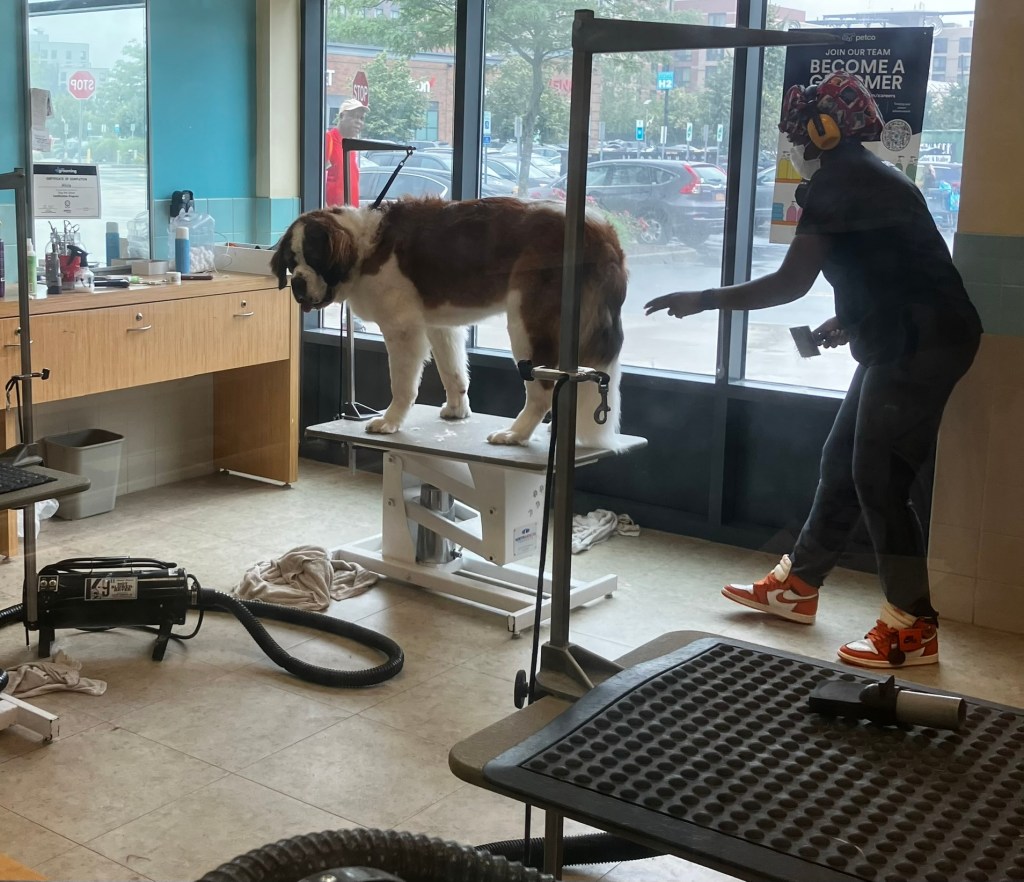
A Peek Behind the Scenes
Video of Esther’s grooming in progress — keeping her coat healthy and her demeanor calm:
Gentle grooming prepares Esther to meet clients with her best paw forward.
Final Thoughts
Taking the time to ensure Esther is well-groomed shows respect for the people we will serve and care for the comfort of my animal. A clean, comfortable, and happy pet is best able to provide the healing presence therapy visits are meant to bring.
 Anna & Esther: A Pet Therapy Team in the Making
Leave a comment