Anna & Esther: A Pet Therapy Team in the Making

Comfort, care, and companionship—offered by a thanatologist and her giant, gentle helper

  • MSW student (Liberty University)
  • MA in Thanatology (CUNY Brooklyn College)
  • Thanatology & community health professional
  • Volunteer bereavement support caller (Accent Care Hospice)
  • Trained end-of-life doula
  • Working toward grief & bereavement therapist licensure
  • Guided by compassion, dignity, and the belief that no one—human or animal—should face death alone
  • Giant breed dogs, with their towering size and gentle hearts, have a long history of bringing comfort to humans. For centuries, these dogs have been guardians, workers, and loved companions. In recent decades, their role has expanded into therapy work, particularly in hospice and end-of-life care. Their calm presence, steady nature, and size make them uniquely suited to offer peace, dignity, and love in moment of vulnerability. (Palomino-Lazaro et al, 2024).
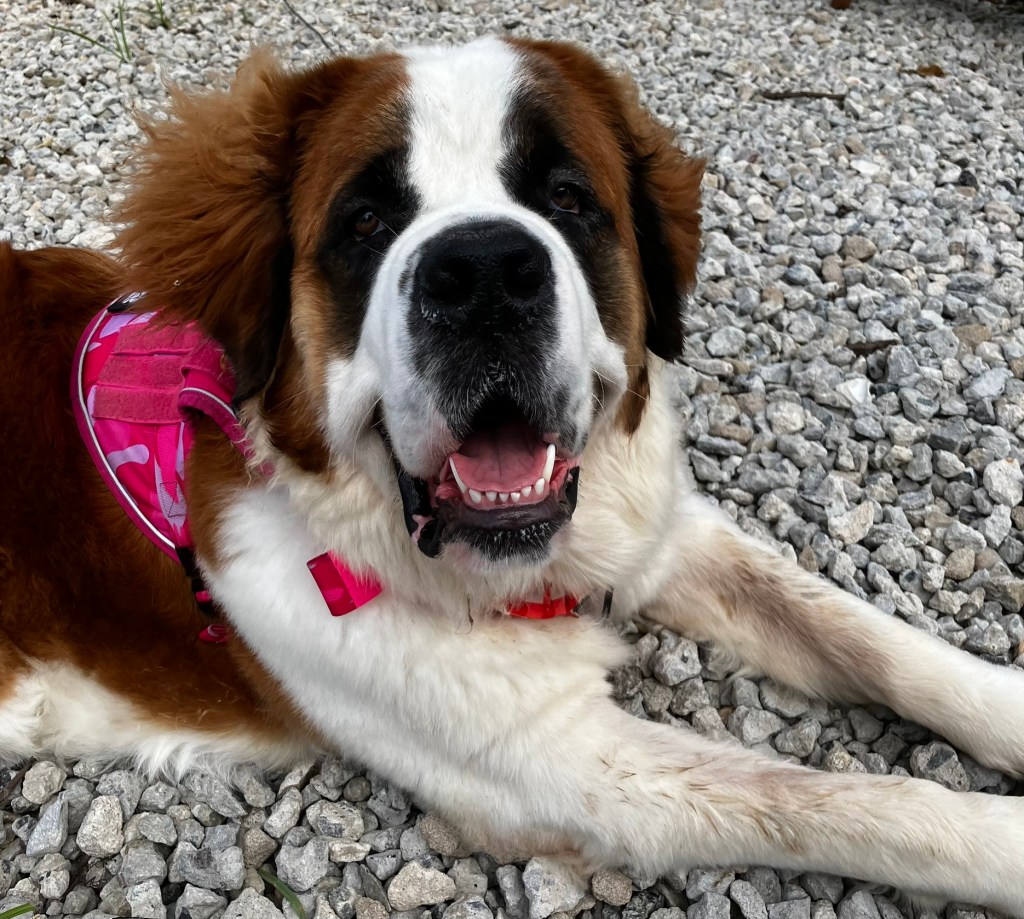
    Esther, a gentle Saint Bernard therapy dog in training.
    Early Roots of Animal Assisted Therapy

    The therapeutic presence of animals has been recognized for centuries. In 18th century England, Quaker institutions encouraged patients to interact with animals for emotional well-being. By the 20th century, scientific research confirmed what many had long felt; animals could reduce stress, ease pain and improve quality of life (Palomino-Lazaro et al., 2024).

    Among these animals, giant breeds, such as Saint Bernards, Newfoundlands and Great Danes, stood out for their patience and temperament. Their history as rescue dogs, companions and protectors translated naturally into therapy roles (American Kennel Club, n.d.).

    Two monks, a workman and a team of Saint Bernards rescue a lost traveller and bring him back to the Hospice of Saint Bernard in the Swiss Alps, circa 1955. (Photo by George Pickow/Three Lions/Hulton Archive/Getty Images)
    Giant Breeds Entering Hospice Care

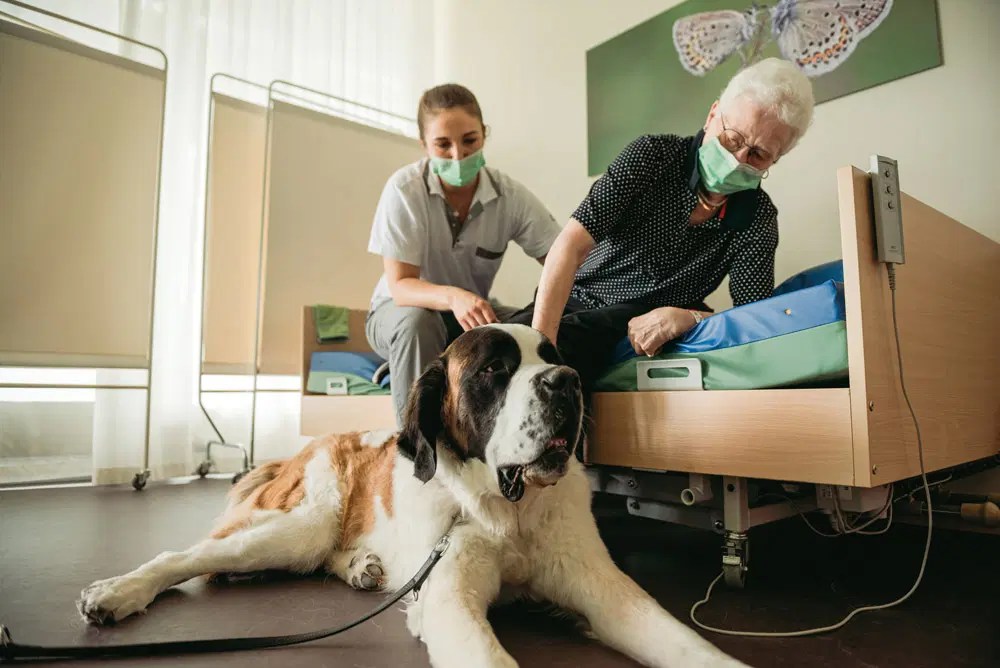
    When hospice programs gained momentum in the United States in the 1970’s, the philosophy centered on quality of life, not curing the person. Giant breed therapy dogs found a natural place in this compassionate care model. Their size allows them to comfortably rest their heads on bedsides, sit calmly at a patient’s feet, or provide a reassuring physical prescence that smaller animals may not convey as strongly.

    Patients often describe a sense of security when a giant dog is nearby, like being embraced in quiet strength. For those at the end of life, this grounding prescence can ease fear, reduce isolation, and offer moments of peace (Schmitz et. al., 2017;HopeHealth, 2023).

    A Saint Bernard offering bedside comfort
    Why Giant Breeds Shine in End- of- Life Care

    While all therapy dogs provide comfort, giant breeds bring something extraordinary to the Hospice setting:

    • A sense of stability: their calm demeanor and large frame provide grounding presence.
    • Physical accessibility:  their size makes it easier for patients in bed to pet or interact without strain.
    • Historical trust: breeds like Saint Bernards and Newfoundlands have centuries-old reputations for rescuing and protecting humans.
    • Gentle spirits: despite their size, these gentle giants are often patient, slow-moving, and deeply intuitive with people in fragile states (Pen Highlands Healthcare, 2023).
    Saint Bernards: Switzerland’s Furry National Icons | a+ Singapore
    Expanded Recognition and Training

    Organizations such as Pet Partners and the American Kennel Club’s Canine Good Citizen (CGC) program have helped formalize the training of therapy dogs, ensuring that giant breeds like Saint Bernards are well prepared for sensitive environments. Their certification builds trust for Hospice programs and families, who rely on therapy teams’ professionalism and compassion (American Kennel Club, n.d.).
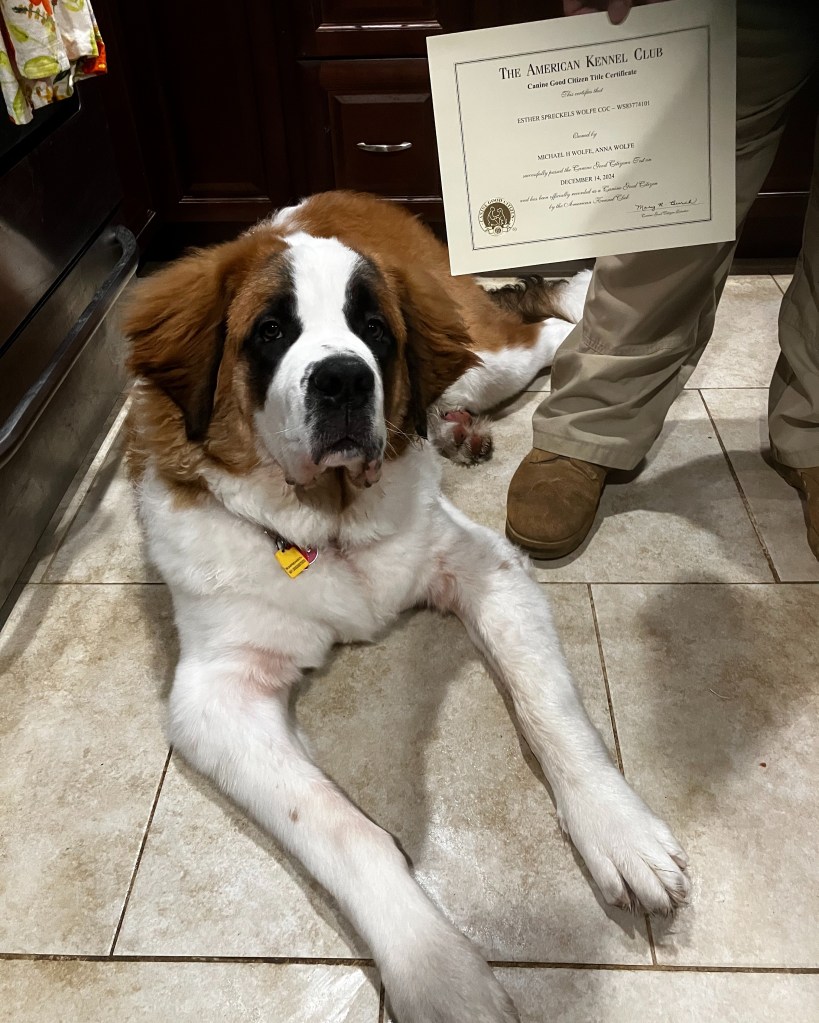
    Esther proudly displaying her Canine Good Citizen Credential Certificate
    A Continuing Legacy of Comfort

    Today, giant breed therapy dogs serve in Hospice programs across the country, offering not just companionship but also a profound sense of dignity. Their presence reminds us that strength and gentleness can coexist, and that love often arrives in the form of a calm, watchful, four-legged friend.

    For families and patients alike, a giant therapy dog’s steady heartbeat and quiet nuzzle provide something beyond medicine: a final gift of comfort, trust, and peace (HopeHealth, 2023).
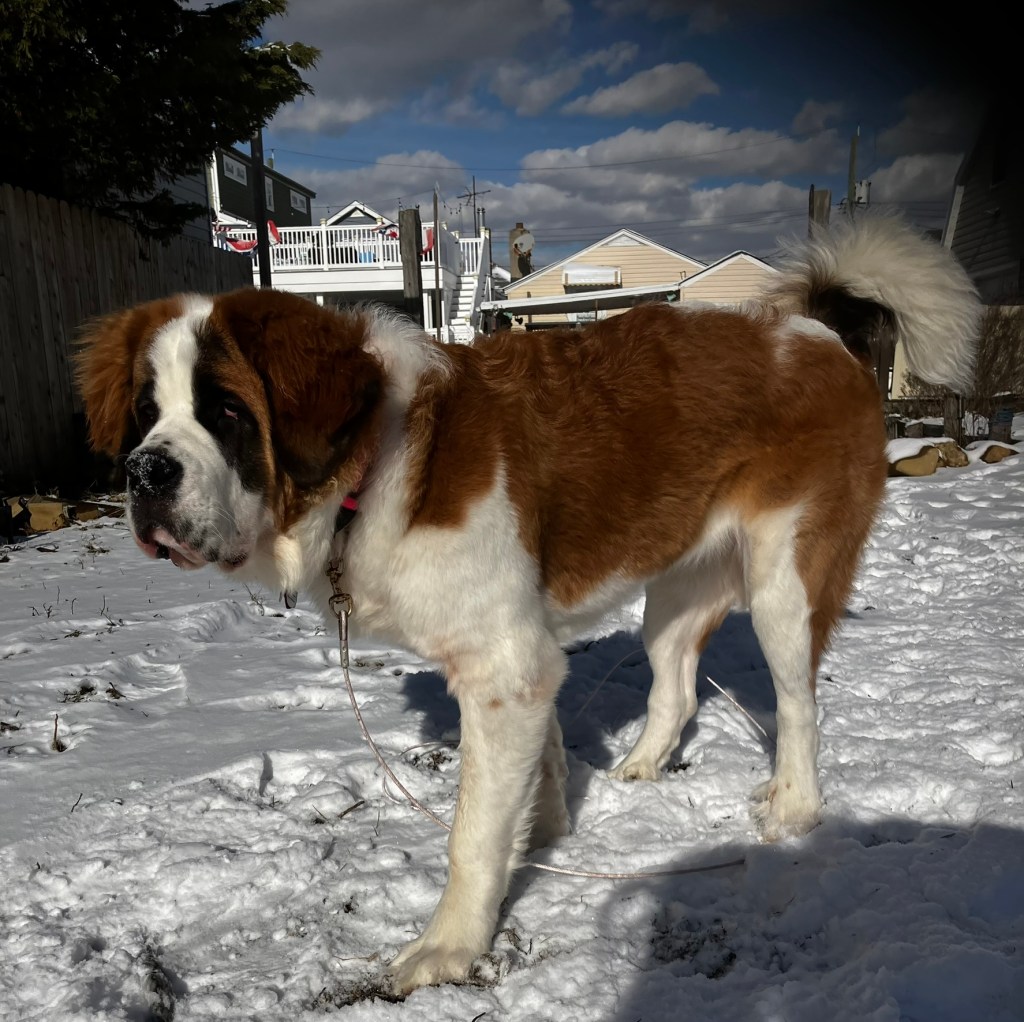
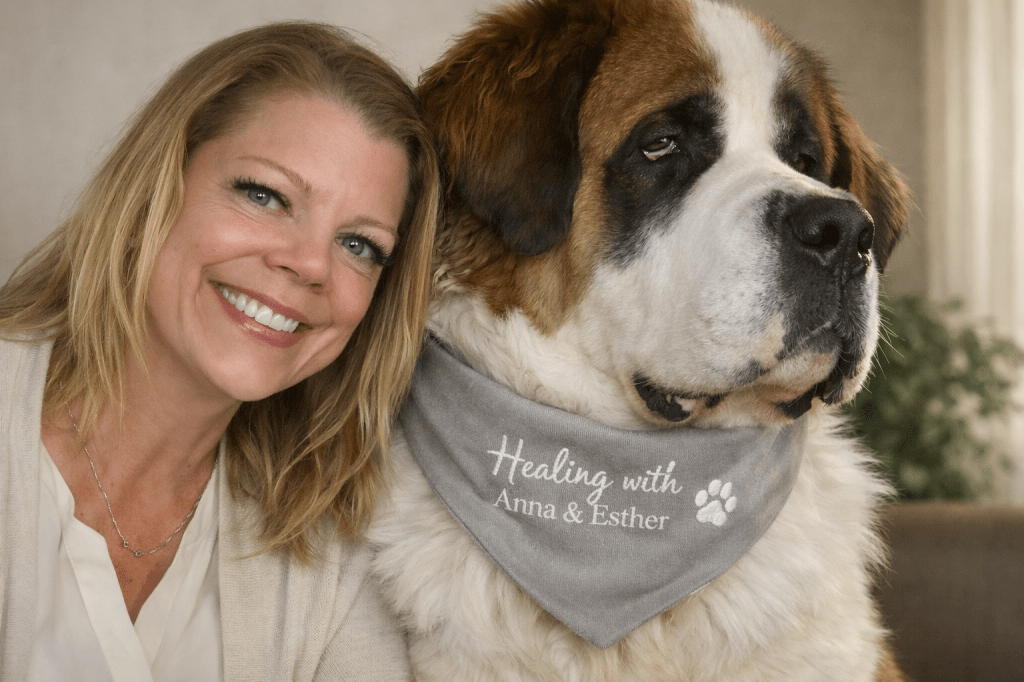
    Strength and gentleness combined: Esther symbolizes the legacy of giant breed therapy dogs in hospice care.
  • 🌿 About Me

    My name is Anna, and I am currently completing my master’s degree at Brooklyn College in Thanatology, the study of death, dying, and bereavement. My life’s work is centered on helping individuals and families navigate the complex realities of death with compassion, dignity, and care.

    I am an end-of-life doula, providing support and guidance to individuals and families during the final stages of life, and I also offer doula services to pet parents navigating their companion animal’s end-of-life journey. In addition, I volunteer with Accent Care, making bereavement calls to help grieving families find comfort and connection after loss. I have also been accepted into the MSW program at Liberty University for the Summer 2026 semester, where I will continue my path toward becoming a licensed grief and bereavement therapist. My long-term goal is to incorporate animal-assisted interventions into my future therapy practice, blending clinical support with the healing presence of therapy animals.

    🐾 About Esther

    Alongside me on this journey is Esther, my gentle giant of a Saint Bernard. At just 16 months old, Esther already weighs 165 pounds—and carries an even bigger heart. Giant breeds like Saint Bernards are often excellent for pet therapy work because of their calm presence, steady nature, and natural ability to provide comfort simply by being near. Esther has already earned her Canine Good Citizen (CGC) certificate, and together we are working toward becoming a registered Pet Partners therapy team.

    🐾 Growing into Her Role

    Even though Esther is large, she is still young for a giant breed and has much growing and maturing ahead. Large dogs like Saint Bernards take longer to fully develop both physically and emotionally, which means patience is key in her training. Right now, she is learning how to balance her playful puppy energy with the calm, comforting demeanor that therapy work requires.

    At the same time, her strengths as a giant breed shine through. Her sheer presence can feel grounding and reassuring, and her gentle nature makes her a natural fit for therapy work. With each step of training, Esther is discovering how to use her size and spirit to bring comfort and connection to others.

    This blog will serve as both a journal and a reflection space as Esther and I prepare for therapy visits, particularly in hospice and end-of-life settings. Here, I’ll share training updates, handler lessons, and the joys and challenges of building a therapy partnership. From practicing calm greetings and leash work to developing resilience around new environments, every step is part of our growth.

    I hope that by documenting our progress, I can show how the human–animal bond can bring comfort, healing, and connection. Esther and I may still be “in the making,” but each paw step forward brings us closer to serving others with love and purpose.


    With love and paw prints,
    Anna & Esther 🐾