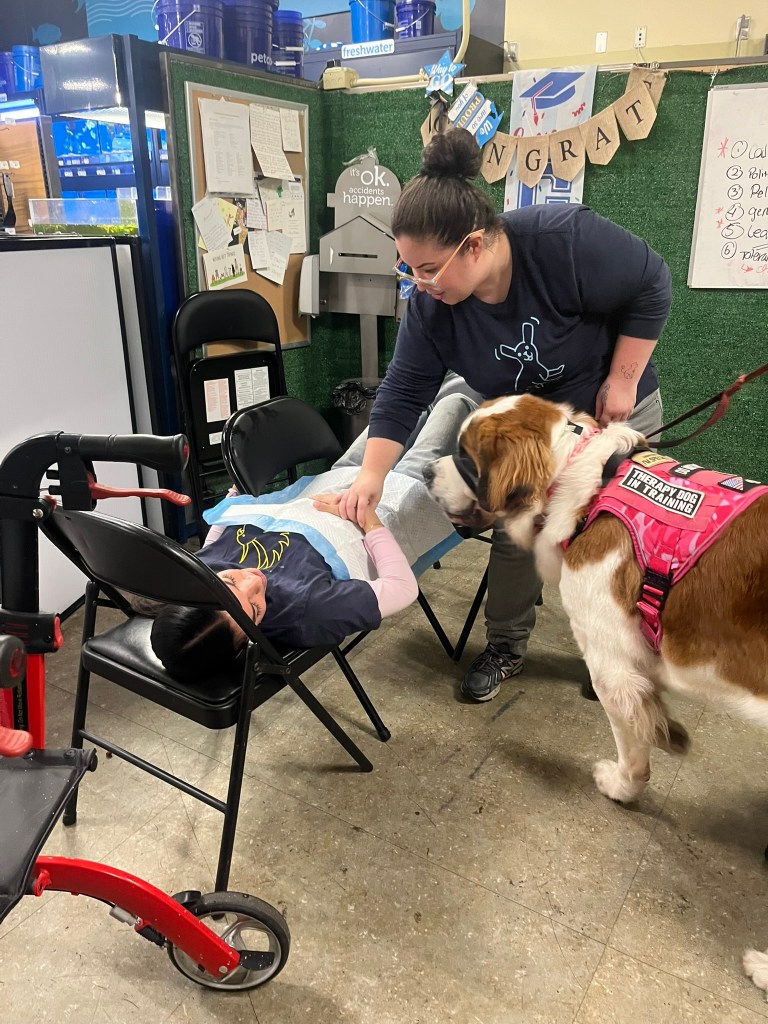
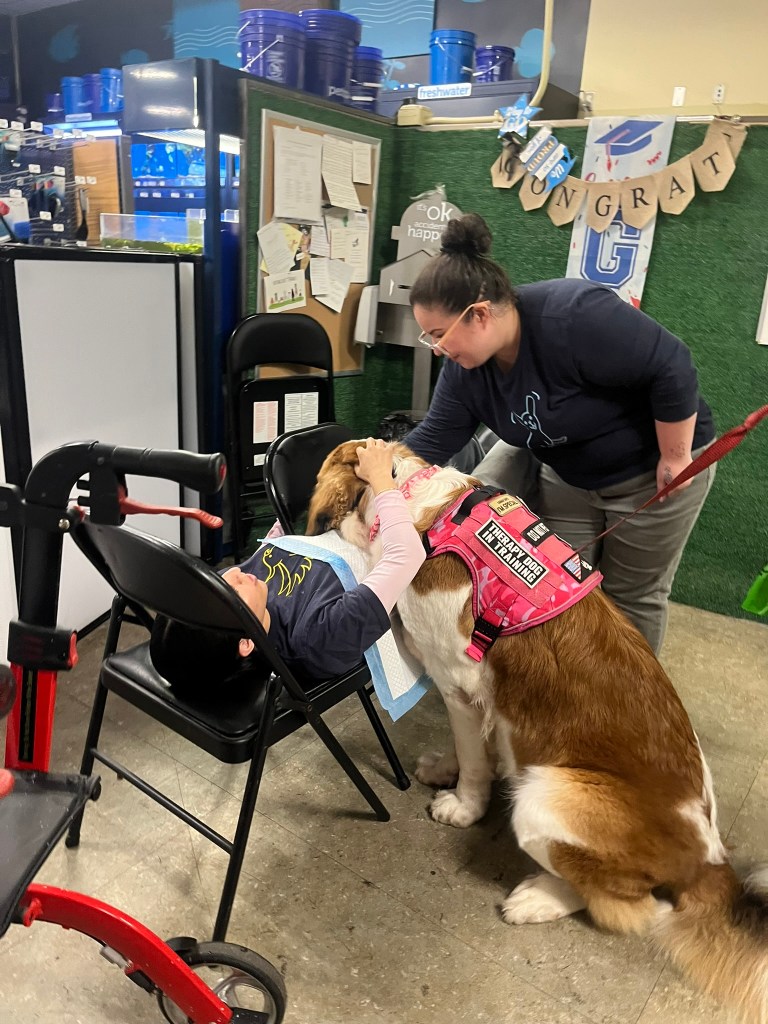
Training Esther for therapy work has opened my eyes to how even the smallest skills can bring comfort to someone who truly needs it. One of the most meaningful cues Esther’s trainers and I are working on right now is “head down,” a gentle position where Esther rests her head close enough for someone to pet her without needing to sit up, reach, or strain.
For clients who cannot get out of bed or who have minimal mobility, this skill is not just helpful; it’s essential. And because safety and infection control always come first, Esther and I practice this with protective barriers, just as we will use them in real healthcare, hospice, and long-term care settings.
Bringing Comfort Within Reach
Many people we will meet during therapy visits may be:
- Bed-bound
- Recovering from surgery
- Attached to medical equipment
- Experiencing pain, weakness, or fatigue
- At the end of life
For them, even reaching out can be exhausting. By teaching Esther to gently move her head closer to the client, she becomes accessible to everyone, not just those who can sit up or lean forward.
Practice Session: Esther Learns to Approach a Reclined Client

Supporting Safety with Protective Barriers
In real facilities, we will always follow infection-control guidelines. This includes using clean, single-use barriers between Esther and any bedding or clothing. Even when only her head is resting near a client, we practice with barriers so that the habit becomes second nature.
Building Trust, Calm, and Connection
The “head down” skill supports more than mobility; it creates space for emotional connection. Some clients may not have the energy to speak, but they can still rest a hand on Esther’s soft fur. That simple connection can provide:
- Grounding during anxiety
- Comfort during pain
- Presence during loneliness
- Companionship at end of life

Making Everyone Feel Included in the Visit
Nothing breaks my heart more than the idea of someone being left out of a therapy visit simply because they can’t move easily. By teaching Esther this skill, it ensures that every person, regardless of mobility level, has the opportunity to feel included, seen, and comforted.
This training helps us say:
- “You matter.”
- “You are not forgotten.”
- “You deserve comfort too.”
Preparing Now for the Clients Who Need Us Most
Each practice session brings us closer to being ready for real therapy visits in hospice, hospitals, children’s programs, and eldercare. Esther is learning:
- To approach beds and chairs slowly
- To stop at a safe and comfortable distance
- To place her head gently on a designated barrier
- To hold her position calmly until cued to move
This is the kind of work that makes therapy-animal visits meaningful, dignified, and accessible.
We practice with care today so we can serve with compassion tomorrow.
 Anna & Esther: A Pet Therapy Team in the Making
Leave a comment