How Esther Learns to Make Safe Choices
When people see Esther, 165 pounds of gentle Saint Bernard fluff, they often can’t imagine her doing anything wrong. However, like every therapy animal, she too needs to master certain skills that ensure everyone’s safety and comfort during visits. One of the most important of these is “Leave it.”
“Leave it” might sound simple, but in the world of Animal-Assisted Interventions, it’s a cornerstone of safety and professionalism. This command teaches therapy animals to ignore distractions, whether that’s food dropped on a hospital floor, a used tissue on a bedside table, or another animal passing by, and most importantly, medication. It’s all about impulse control and trust between handler and animal.
💊 Why “Leave It” Matters
In a healthcare or hospice setting, unexpected moments happen all the time. A nurse might accidentally drop a pill bottle, scattering medication across the floor. For an untrained dog, that might look like a treat, or at least something interesting to sniff. But for a therapy animal, even one curious nose near those pills could be dangerous.
That’s where “leave it” becomes more than a command; it’s a safeguard. It ensures Esther pauses and looks to me or her trainer instead for direction, instead of investigating something that could harm her or someone else. In these moments, her restraint protects both her health and the well-being of the people we’re there to serve.
Beyond infection control and safety, “leave it” also promotes respectful boundaries. Clients may have food trays, medical supplies, or personal belongings nearby. When Esther calmly walks past without touching, it shows professionalism and helps everyone feel secure.
🐾 Training in Progress
We practice “leave it” every day, both at home and on walks, as well as during training sessions. I start with small challenges, such as dropped treats, and then progress to more complex ones, like pill bottles or crinkly food wrappers. Each time Esther resists the urge and looks at me instead, she earns praise (and sometimes a reward). The goal is for the behavior to become second nature, so even when something unexpected hits the floor during a visit, she knows exactly what to do.
Trust, Respect, and Teamwork
“Leave it” isn’t just about obedience; it’s about trust. It says, I trust you to make the right choice, and you can trust me to keep you safe.
That mutual respect transforms a well-behaved dog into a confident and compassionate therapy partner, one ready to bring calm and comfort, regardless of the environment.
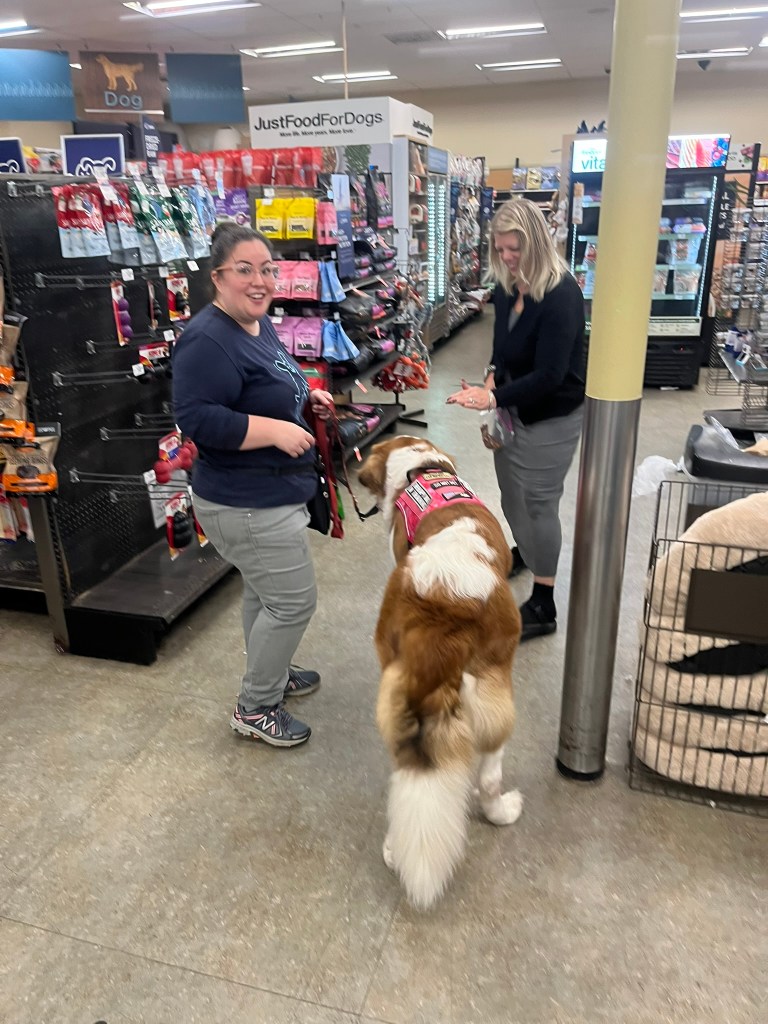
Today at the pet store, Esther had a big training moment, and she nailed it! With treats, toys, and distractions everywhere, she practiced her “leave it” skill beautifully.
Her trainer and I praised her for a job well done, and she soaked up every bit of that encouragement.
Every session brings her one step closer to becoming the calm, safe, and reliable therapy partner she’s meant to be.
 Anna & Esther: A Pet Therapy Team in the Making
Leave a comment