Building Trust and Teamwork in Therapy Settings
One of the most essential lessons from Unit 6 is that therapy animal visits aren’t just about the handler and the animal; they’re about teamwork and collaboration. Each visit is a collaborative effort between the visiting team, the staff, and the individuals receiving care. A successful visit depends on effective communication, mutual respect, and thorough preparation.
When Esther and I visit facilities, we will be mindful that we’re stepping into someone else’s space; a space where emotions, medical care, and daily routines intersect. Our role is to support, not disrupt. Facilities have their own rhythms, infection control policies, and safety protocols for good reasons. By learning and following them carefully, we will help protect the people we serve and build trust with staff.
🤝 The Importance of Collaboration
Partnering with a facility means understanding that every visit happens as part of a larger care plan. Staff members know their clients best, who may enjoy a visit, who might be fearful of animals, or who may need rest instead of company. By checking in with them first, we respect both professional boundaries and emotional readiness.
I’ve learned that asking, “Is now a good time for a visit?” is one of the most respectful questions a handler can ask. It shows consideration for the client’s comfort and for the staff’s workflow.
Good communication also extends beyond words. Reading the room, noticing nonverbal cues, and knowing when to step back are all vital skills for therapy animal teams.
Practicing Collaboration
Safety, Cleanliness, and Professionalism
Therapy visits bring comfort, but they must also protect health and safety. That’s why Pet Partners emphasizes infection control.
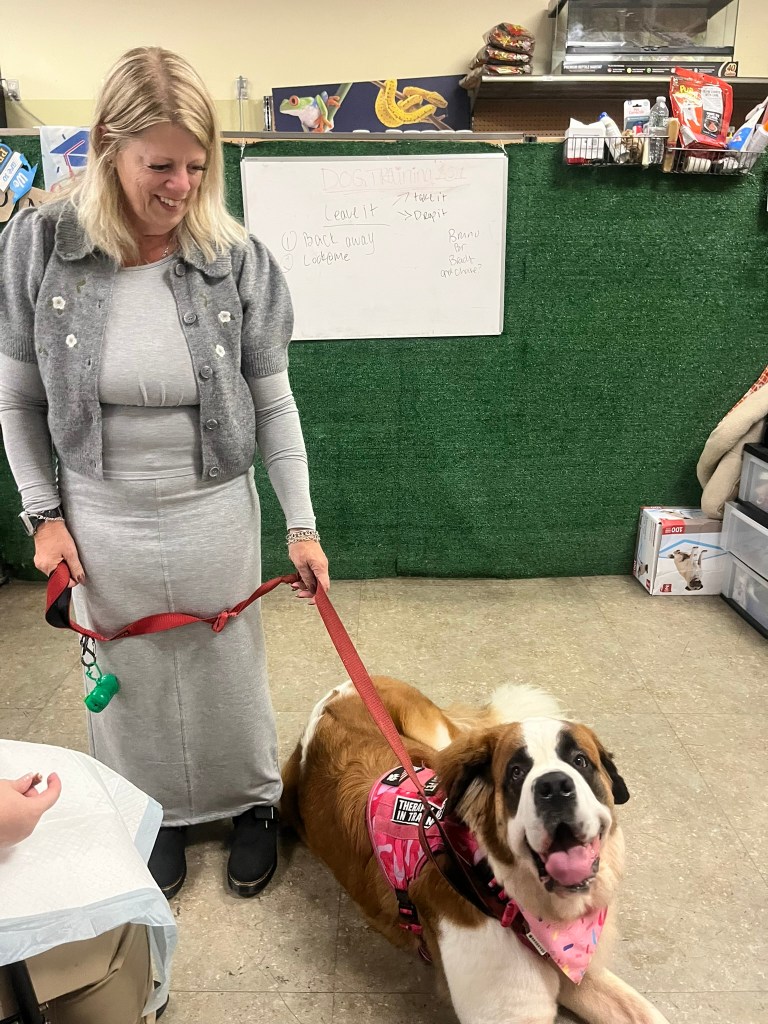
Before and after each interaction, handlers and clients should sanitize their hands. Esther’s grooming and cleanliness are just as important; she’s brushed before every visit, wears a clean vest, and avoids jumping up or licking.
Professionalism also includes dressing appropriately, arriving on time, and having all necessary supplies ready: a brush, wipes, paperwork, and, of course, Esther’s water bowl. It’s these small details that communicate reliability and respect for the facility’s expectations.
🐾 Respecting Boundaries and Roles
Handlers must remember that we’re guests, not staff members. We don’t give medical advice or handle private information. Our visits should always support, never replace, the therapeutic goals of the facility’s professionals.
Esther’s gentle presence can enhance what’s already happening in the environment: offering quiet companionship in hospice or sparking conversation in memory care. She doesn’t need to “do” much, just be.
Preparing for Future Visits
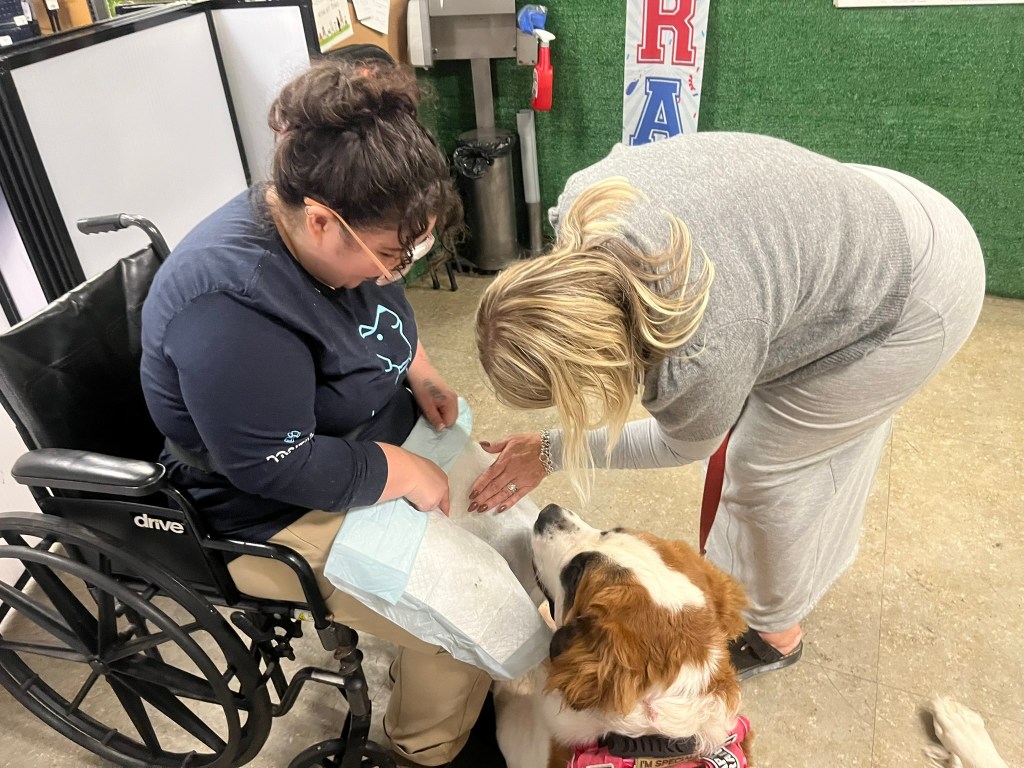
To build our confidence, Esther and I have started conducting mock visits that closely mirror real facility settings. During these practice sessions, we work around medical equipment, such as wheelchairs and walkers, so Esther can learn to navigate safely in tighter spaces. We practice gentle greetings, respectful approaches, and calm transitions when moving between “rooms.”
These mock visits have been incredibly valuable — they’ve helped us understand how to navigate different environments, maintain focus even in the face of distractions, and collaborate smoothly with others in a care setting. Each session brings us one step closer to being ready for real visits in hospices and nursing homes.
Partnering with a facility isn’t a one-time arrangement; it’s an ongoing relationship built on mutual trust, professionalism, and compassion. Esther and I are excited to take these lessons forward, one gentle step at a time.
 Anna & Esther: A Pet Therapy Team in the Making
Leave a comment