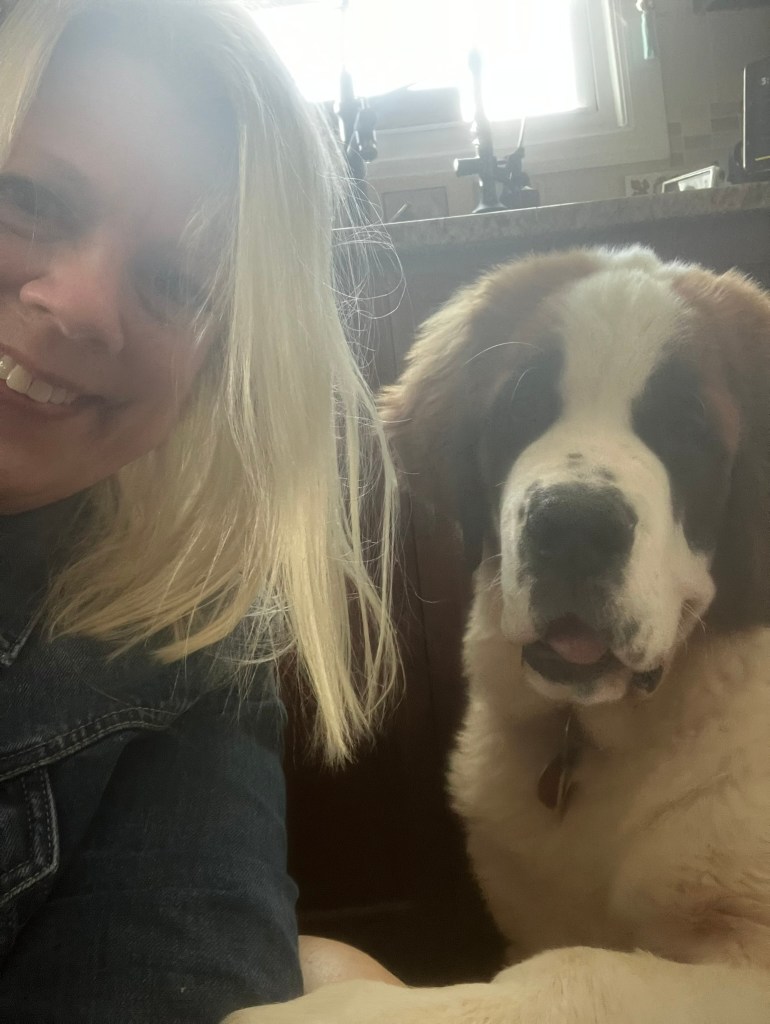
As Esther and I continue our journey toward getting evaluated and registered as a Pet Partners therapy team, I’ve come to see that this process is just as much about me as it is about her. The Pet Partner’s Handler course has helped me step into my role with greater awareness, responsibility, and purpose. Esther may be the one with a big heart and gentle eyes, but it is my job to ensure she feels safe and supported so she can shine. The first three units, which include discovering therapy animal work, the handler, and the animal, have given me new insight into what it really means to grow into this role.
Unit 1: Discovering Therapy Animal Work
This unit opened my eyes to the bigger picture of therapy animal work. It’s not just about having a sweet-natured dog; it’s about the partnership between handler and animal. I learned that the handler sets the tone for visits, creating the conditions for the animal to succeed. With Esther, I see this already in small ways. If I’m calm, she settles. If I’m tense, she looks at me and mirrors that energy. I learned that I am not simply walking into a visit with her; I am actively shaping the environment where her gentleness can make a difference. That realization has changed how I approach even her daily training sessions at home.

Unit 2: The Handler
This unit drove home the importance of my role as Esther’s advocate. It reminded me that while others may be focused on petting Esther or interacting with her, my attention must always stay on her needs. Therapy visits can be full of excitement and unpredictability, and it’s my responsibility to protect her from being overwhelmed. And learning to read the subtleties in her body language, when she leans in, when she shifts away, when she pauses and looks at me for reassurance.
Understanding that I am her voice has been one of the most important lessons so far. She can’t say when she’s tired or when she’s had enough. That falls on me. Being a handler means being prepared to say no or step in, even if others don’t understand why you’re doing so. It has deepened my bond with Esther because she’s learning that she can trust me to watch out for her no matter what.
Unit 3: The Animal
This unit focused on the qualities and preparation that make an animal suited for therapy work. While Esther brings her own natural friendliness, it’s my role to help her adapt to the environments she will eventually serve in. This means introducing her to various noises, equipment, and situations so that she can remain relaxed when things get busy.
I’ve been practicing this with her trainers through role-playing, having multiple people talk to her at once, or petting her from different angles, just as she might experience in a hospital or assisted living facility. These sessions remind me that her success doesn’t happen by accident. It requires intentional preparation, and I’m the one responsible for guiding her through it. The more prepared I make her, the more comfortable she will be when the real visits begin.
What I’ve learned so far is that being a handler is not a background role. It’s central to the entire therapy team. Esther is the one who will bring comfort and joy to others, but I am the one who makes sure she has everything she needs to do that safely and happily. I set us up for success. Each unit of this course helps me understand that I’m not just Esther’s owner; I am her partner, her advocate, and her steady anchor as we step into this meaningful work together, G-d willing.

As Esther and I continue this journey, I know there will be many more lessons ahead for both of us. I will be sharing the Pet Partner’s Handler units and what I’m learning in later blog posts, so you can follow along with our progress as we grow together as a therapy team.
If you are interested in getting involved with your own pet, click on the link below the logo:

 Anna & Esther: A Pet Therapy Team in the Making
Leave a comment