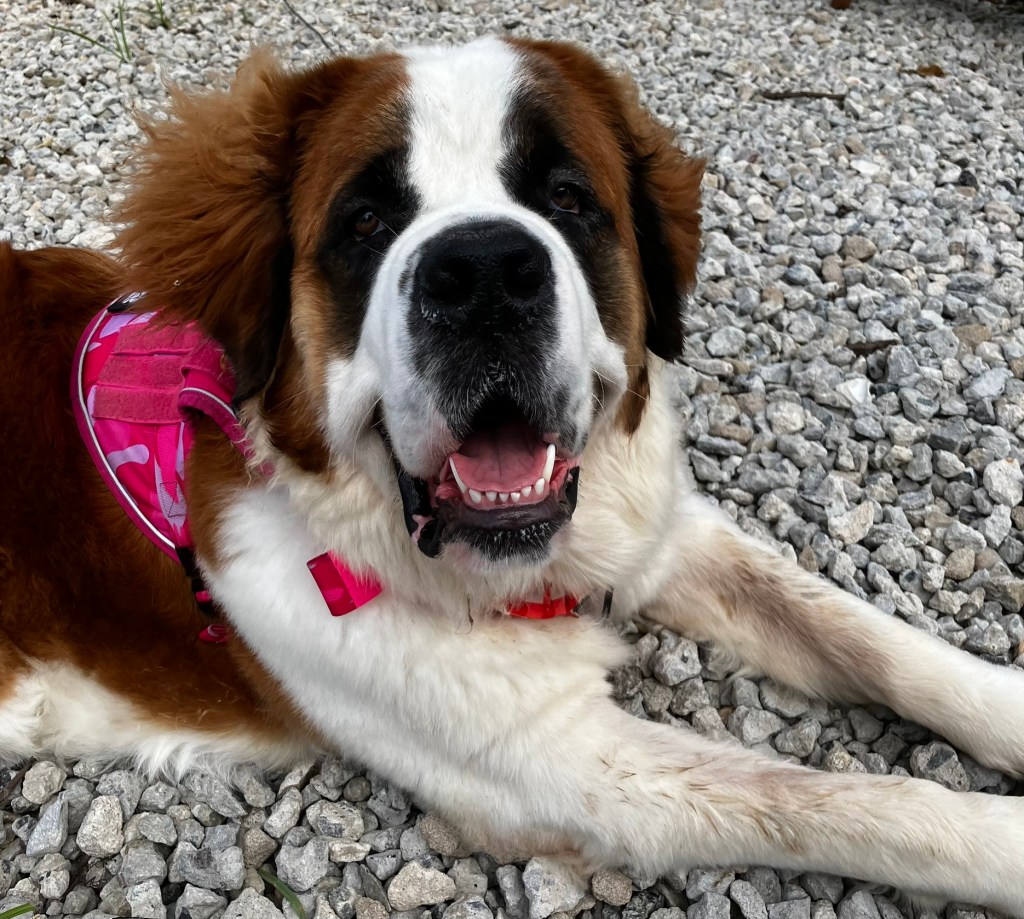
Giant breed dogs, with their towering size and gentle hearts, have a long history of bringing comfort to humans. For centuries, these dogs have been guardians, workers, and loved companions. In recent decades, their role has expanded into therapy work, particularly in hospice and end-of-life care. Their calm presence, steady nature, and size make them uniquely suited to offer peace, dignity, and love in moment of vulnerability. (Palomino-Lazaro et al, 2024).
Early Roots of Animal Assisted Therapy
The therapeutic presence of animals has been recognized for centuries. In 18th century England, Quaker institutions encouraged patients to interact with animals for emotional well-being. By the 20th century, scientific research confirmed what many had long felt; animals could reduce stress, ease pain and improve quality of life (Palomino-Lazaro et al., 2024).
Among these animals, giant breeds, such as Saint Bernards, Newfoundlands and Great Danes, stood out for their patience and temperament. Their history as rescue dogs, companions and protectors translated naturally into therapy roles (American Kennel Club, n.d.).

Giant Breeds Entering Hospice Care
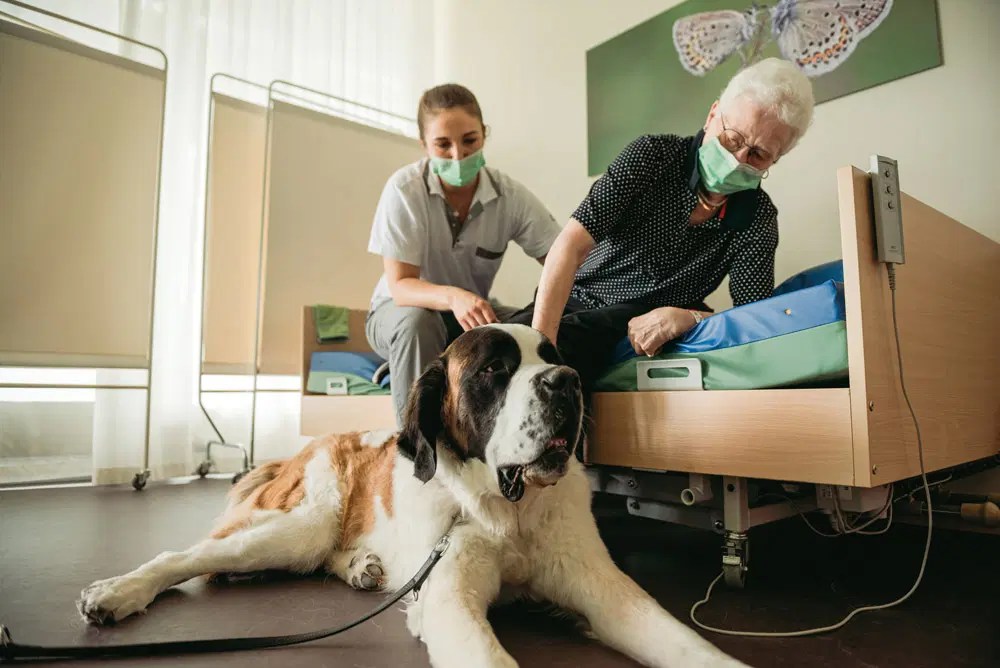
When hospice programs gained momentum in the United States in the 1970’s, the philosophy centered on quality of life, not curing the person. Giant breed therapy dogs found a natural place in this compassionate care model. Their size allows them to comfortably rest their heads on bedsides, sit calmly at a patient’s feet, or provide a reassuring physical prescence that smaller animals may not convey as strongly.
Patients often describe a sense of security when a giant dog is nearby, like being embraced in quiet strength. For those at the end of life, this grounding prescence can ease fear, reduce isolation, and offer moments of peace (Schmitz et. al., 2017;HopeHealth, 2023).

Why Giant Breeds Shine in End- of- Life Care
While all therapy dogs provide comfort, giant breeds bring something extraordinary to the Hospice setting:
- A sense of stability: their calm demeanor and large frame provide grounding presence.
- Physical accessibility: their size makes it easier for patients in bed to pet or interact without strain.
- Historical trust: breeds like Saint Bernards and Newfoundlands have centuries-old reputations for rescuing and protecting humans.
- Gentle spirits: despite their size, these gentle giants are often patient, slow-moving, and deeply intuitive with people in fragile states (Pen Highlands Healthcare, 2023).
Expanded Recognition and Training
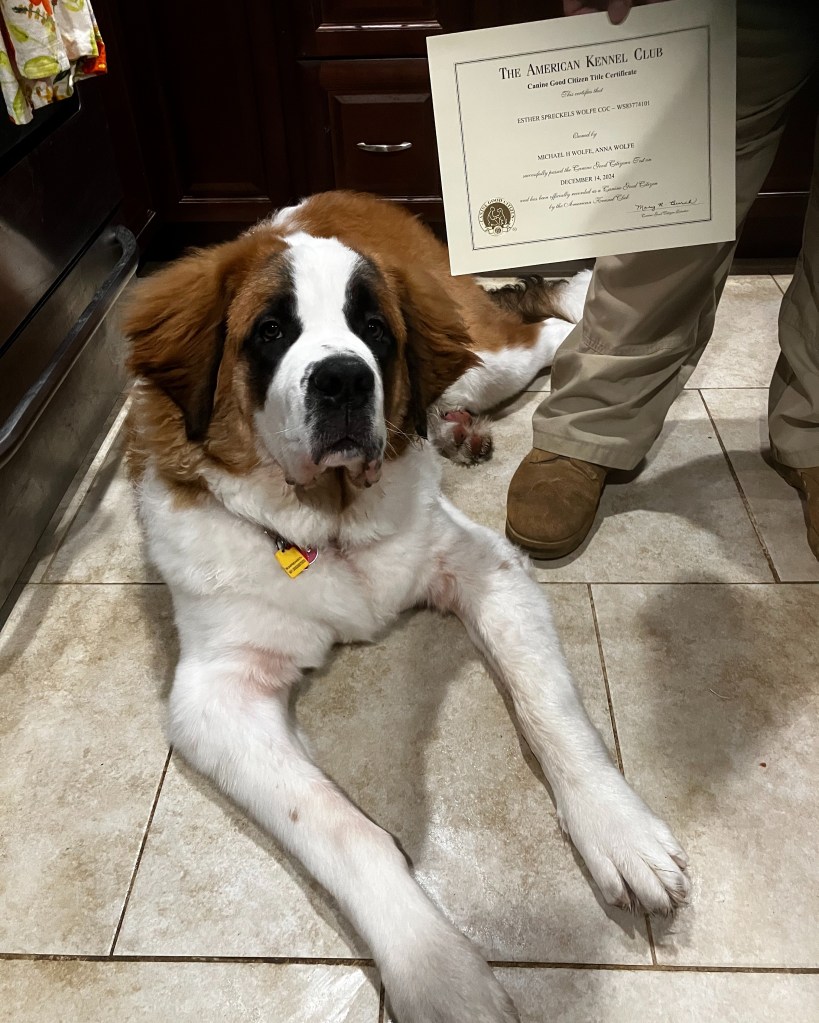
Organizations such as Pet Partners and the American Kennel Club’s Canine Good Citizen (CGC) program have helped formalize the training of therapy dogs, ensuring that giant breeds like Saint Bernards are well prepared for sensitive environments. Their certification builds trust for Hospice programs and families, who rely on therapy teams’ professionalism and compassion (American Kennel Club, n.d.).
A Continuing Legacy of Comfort
Today, giant breed therapy dogs serve in Hospice programs across the country, offering not just companionship but also a profound sense of dignity. Their presence reminds us that strength and gentleness can coexist, and that love often arrives in the form of a calm, watchful, four-legged friend.
For families and patients alike, a giant therapy dog’s steady heartbeat and quiet nuzzle provide something beyond medicine: a final gift of comfort, trust, and peace (HopeHealth, 2023).
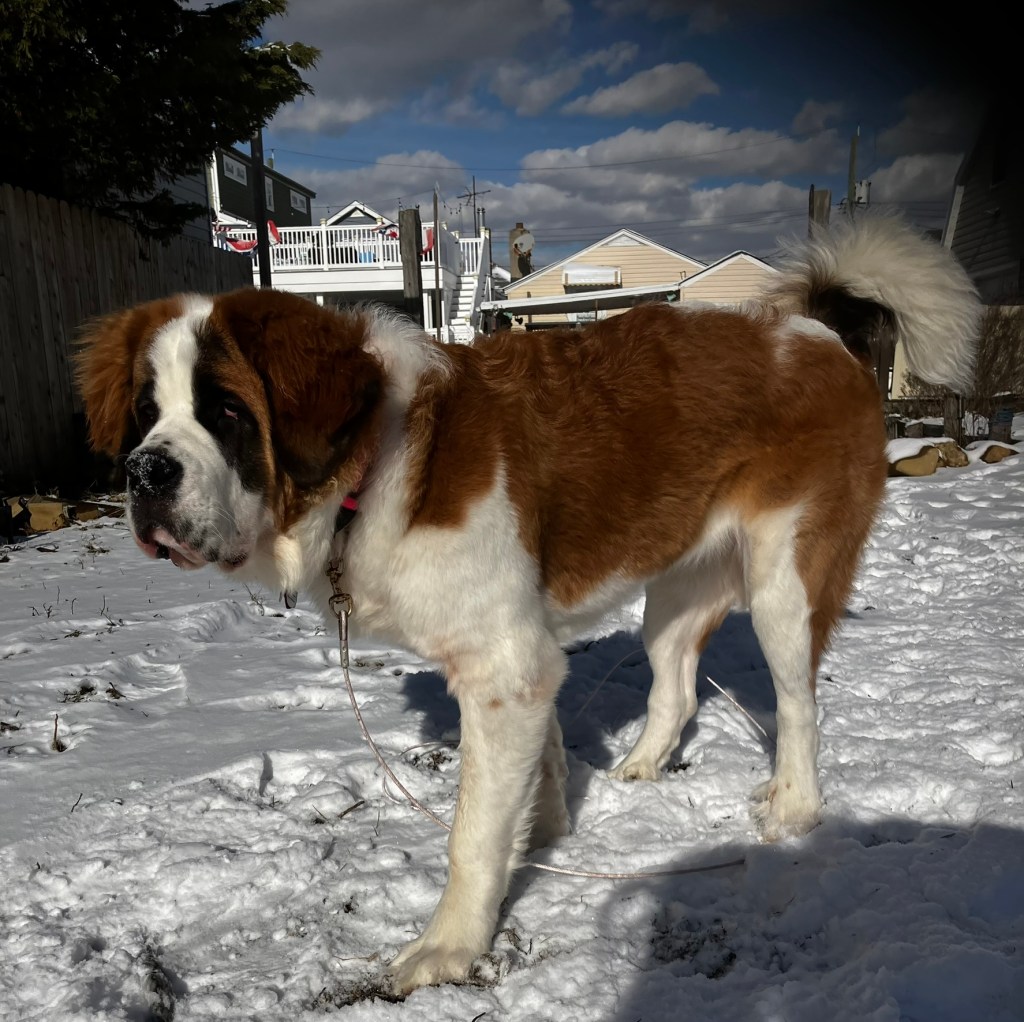
 Anna & Esther: A Pet Therapy Team in the Making
Leave a comment